At the table
How to enjoy it
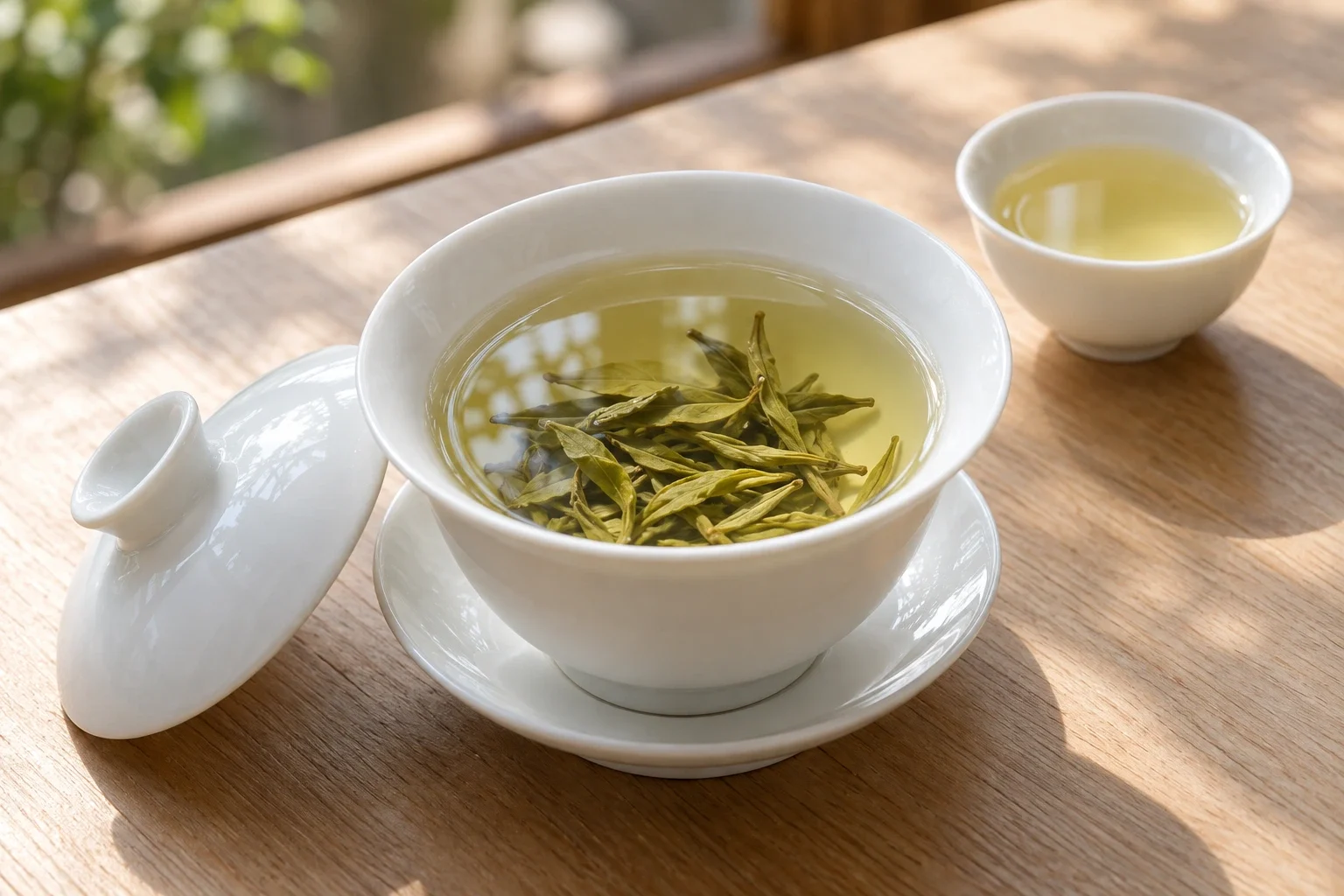
Let the tea cool slightly and sip, leaving the leaves behind.
A useful check
Contains caffeine. Check additions if avoiding particular ingredients.
How it may vary
Tea bases and leaf shapes vary; jasmine pearls are one form, not the whole category.
Know what you’re trying.
Prepared tea; no fixed brand, package size or strength.
Ingredients
Jasmine-scented green tea and water.
Origin & regional roots
Origin not yet established
A regional origin has not been established in this guide.
Explore related drinksAsk if they have it first
ASK IF IT'S AVAILABLE
请问你们有茉莉花茶吗?
Do you have this item?
A LITTLE SOMETHING TO READ
Story & history
Flower fragrance in tea leaves
This account describes a tradition or story, rather than an established historical fact.
In Fuzhou’s scenting tradition, tea leaves absorb the aroma of jasmine flowers. A cup can smell floral without visible blossoms. The selected green-tea version combines tea flavour with jasmine fragrance.