
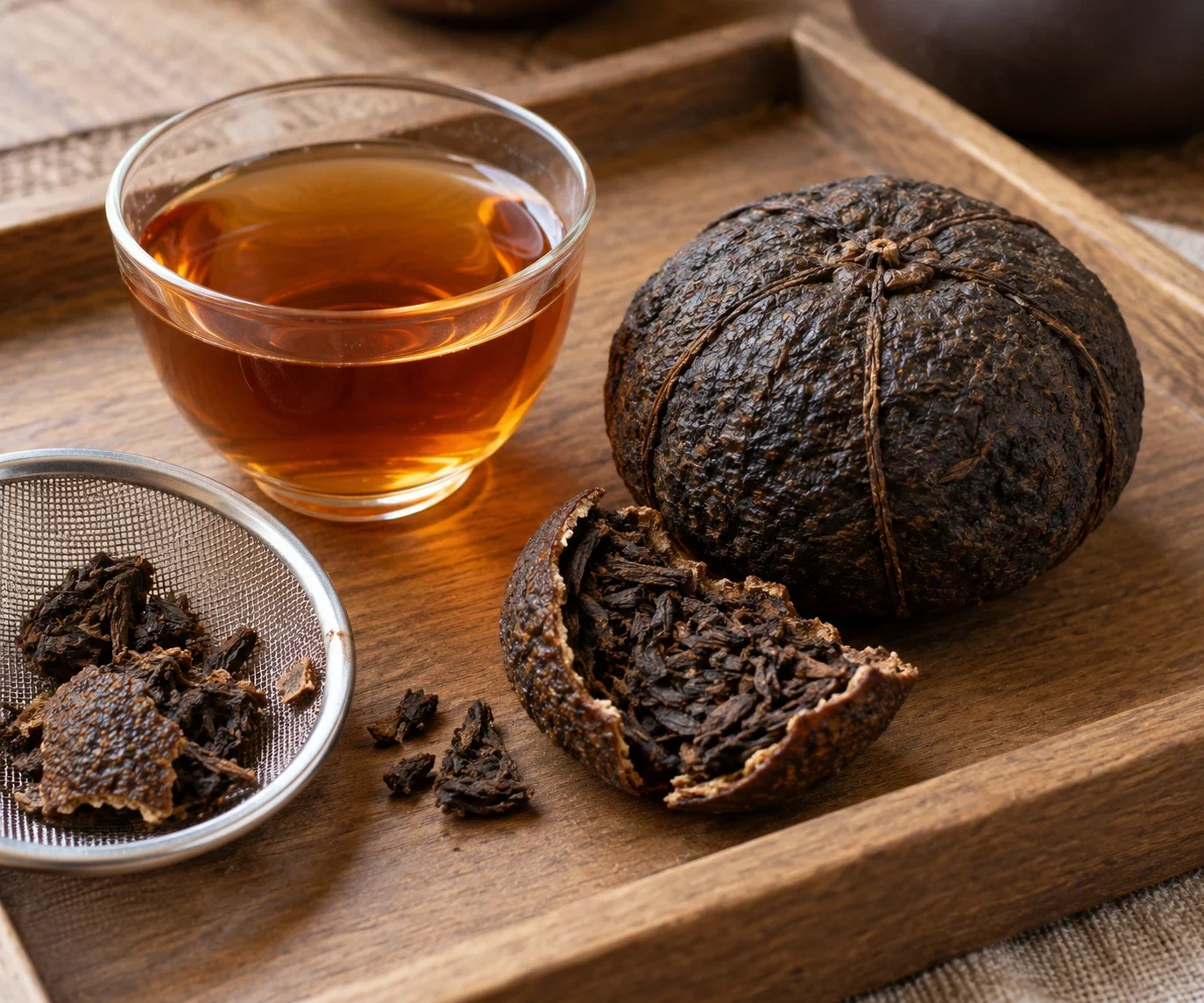
At the table
Sip the strained tea after cooling slightly. A whole tea ball is brewing material, not a snack: ask for pieces prepared for brewing and leave the solids behind.
The selected citrus-and-tea recipe is plant-based but contains caffeine. Check blends separately; the traditional herbal reputation is not a health guarantee.
Some family recipes add perilla, liquorice or salt. Tea type and aging differ; do not assume every product has the same blend.
Know what you’re trying.
- Specification
- Mix seedless hutou-gan citrus pulp with tea leaves, refill its rind, then repeatedly steam, press and dry it into a hard tea ball. Break off peel-and-tea pieces, brew in hot water and strain. The selected version contains only citrus and tea. Some family recipes add perilla, liquorice or salt. Tea type and aging differ; do not assume every product has the same blend.
Ingredients
Hutou-gan sour citrus, tea leaves, brewing water.
Origin & regional roots
Taiwan
Associated with Taiwan.
About this regional connection
Taiwan: Taiwan Hakka preservation and tea-making practice.
Ask if they have it first
请问你们有客家酸柑茶吗?
Do you have this item?
A LITTLE SOMETHING TO READ
Story & history
Hakka sour-citrus tea
This account describes a tradition or story, rather than an established historical fact.
In Taiwanese Hakka communities, drying tea within citrus rind reflects a tradition of preserving and using the fruit. The finished dark, hard ball is broken before brewing.