
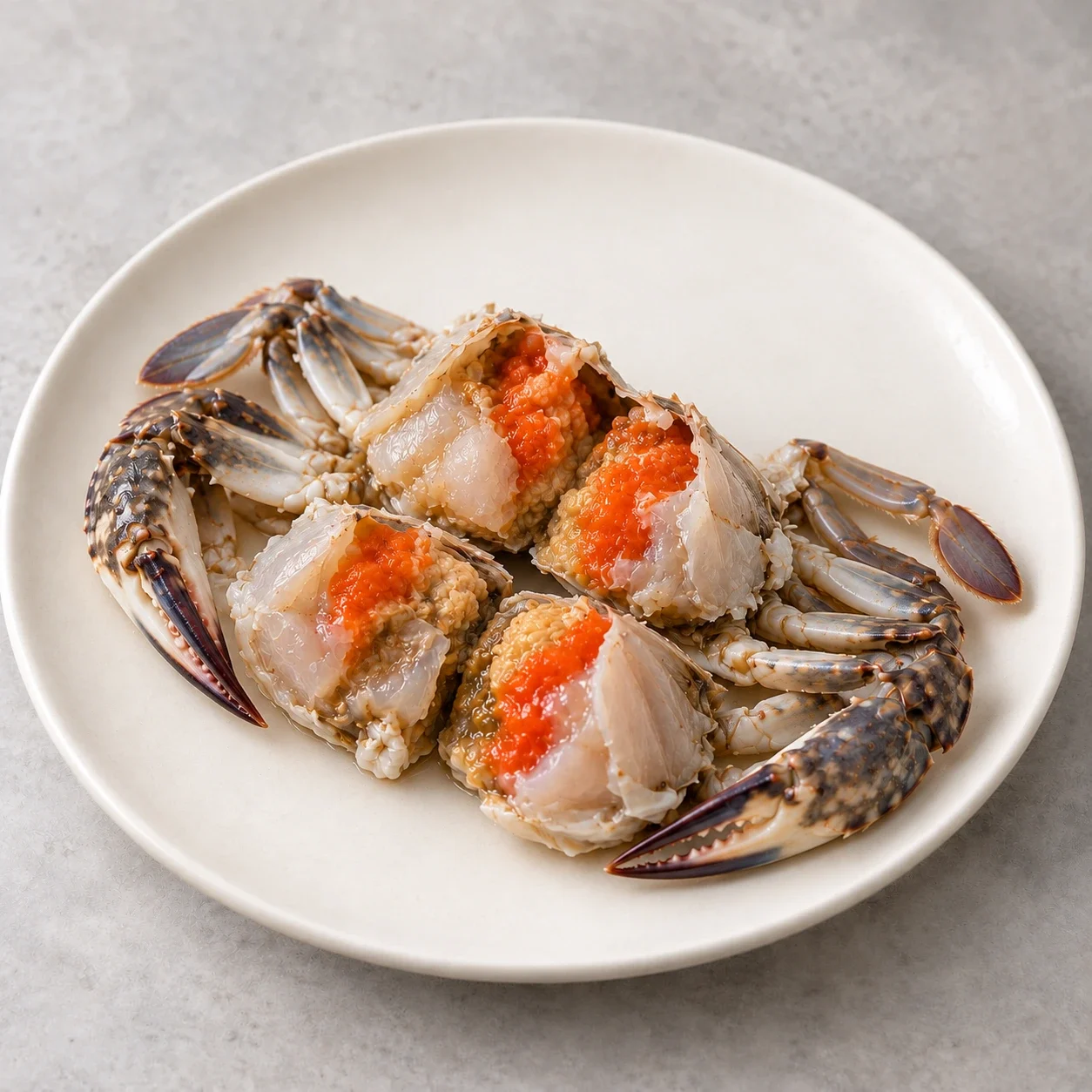
At the table
It is traditionally shared in small shell-on pieces with plain rice or paofan. Only flesh and roe are eaten, not shell or gills. Confirm that it is raw before ordering; choose thoroughly cooked crab if avoiding raw seafood.
Raw crab can carry harmful microbes or parasites. Salt, alcohol and vinegar do not make it safe. Choose thoroughly cooked seafood, especially for children, pregnant people and those with weakened immunity. Contains crustaceans; some versions contain alcohol.
Salt-cured raw crab is distinct from cooked crab. Chilling, freezing or a wine marinade must not be mistaken for cooking.
GET TO KNOW THE DISH
What goes into it?
Explore some key ingredients below. Preparations may use additional seasonings and ingredients.
Some versions add baijiu, ginger, scallion, Sichuan pepper or star anise. Vinegar may accompany it. Seasoning and salinity vary.
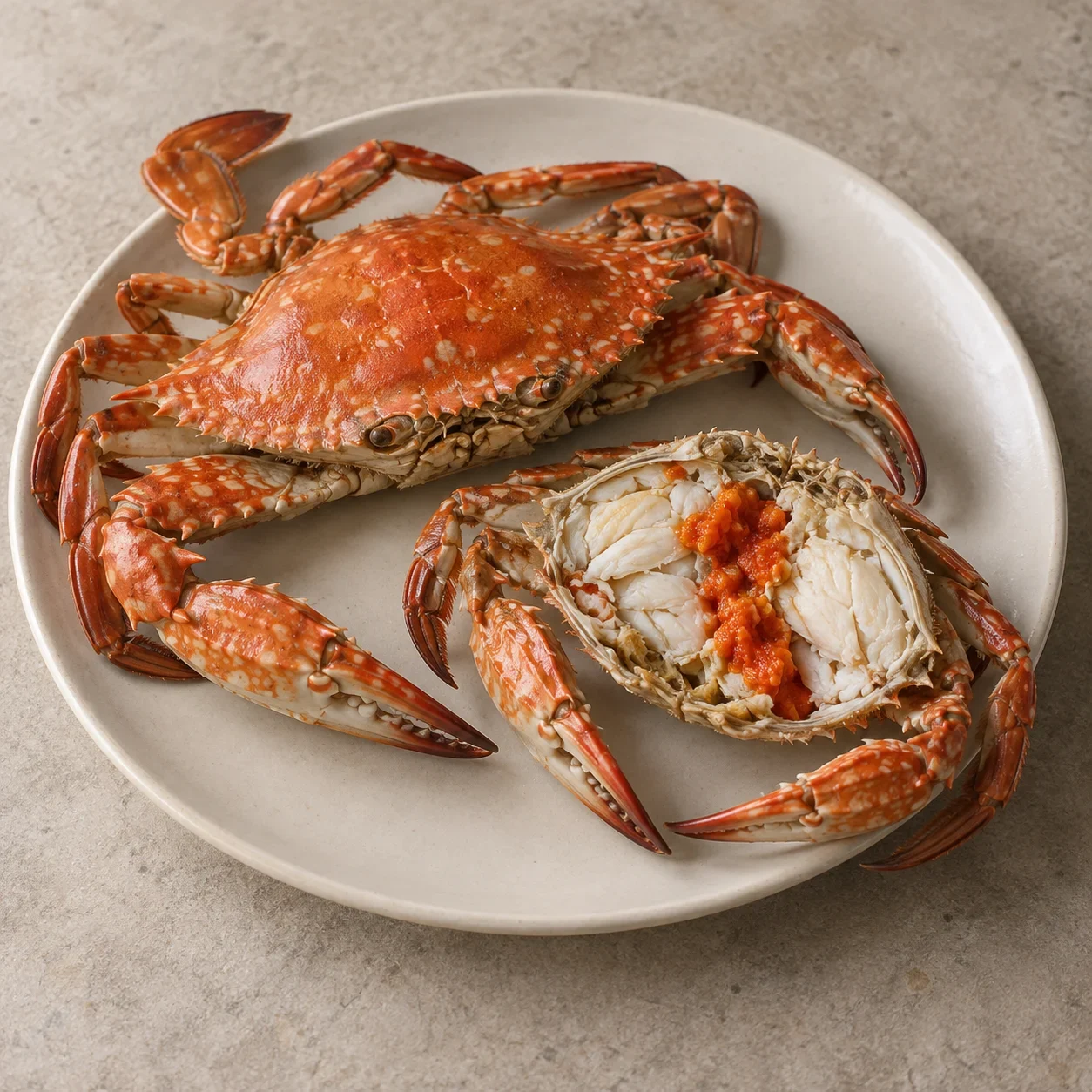

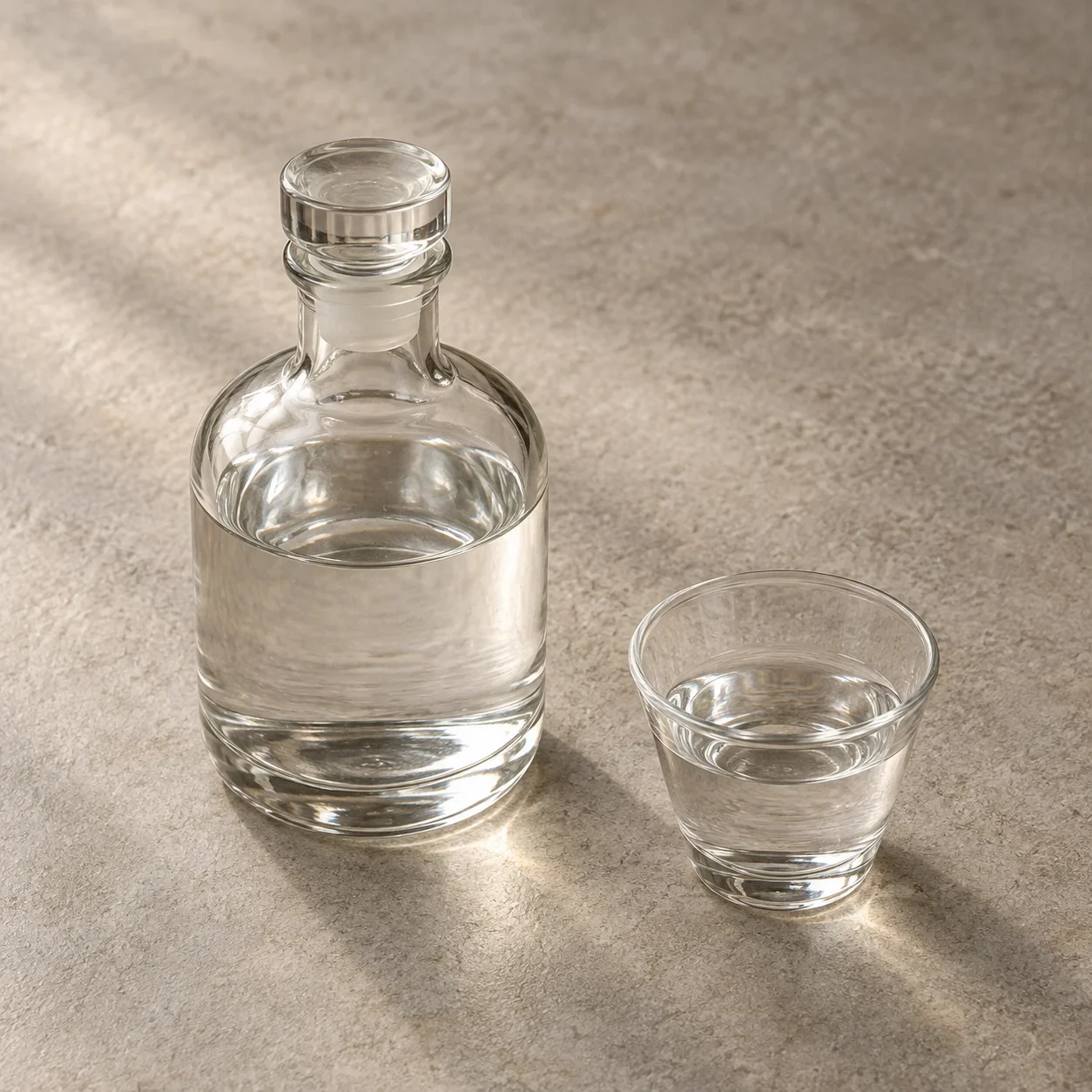
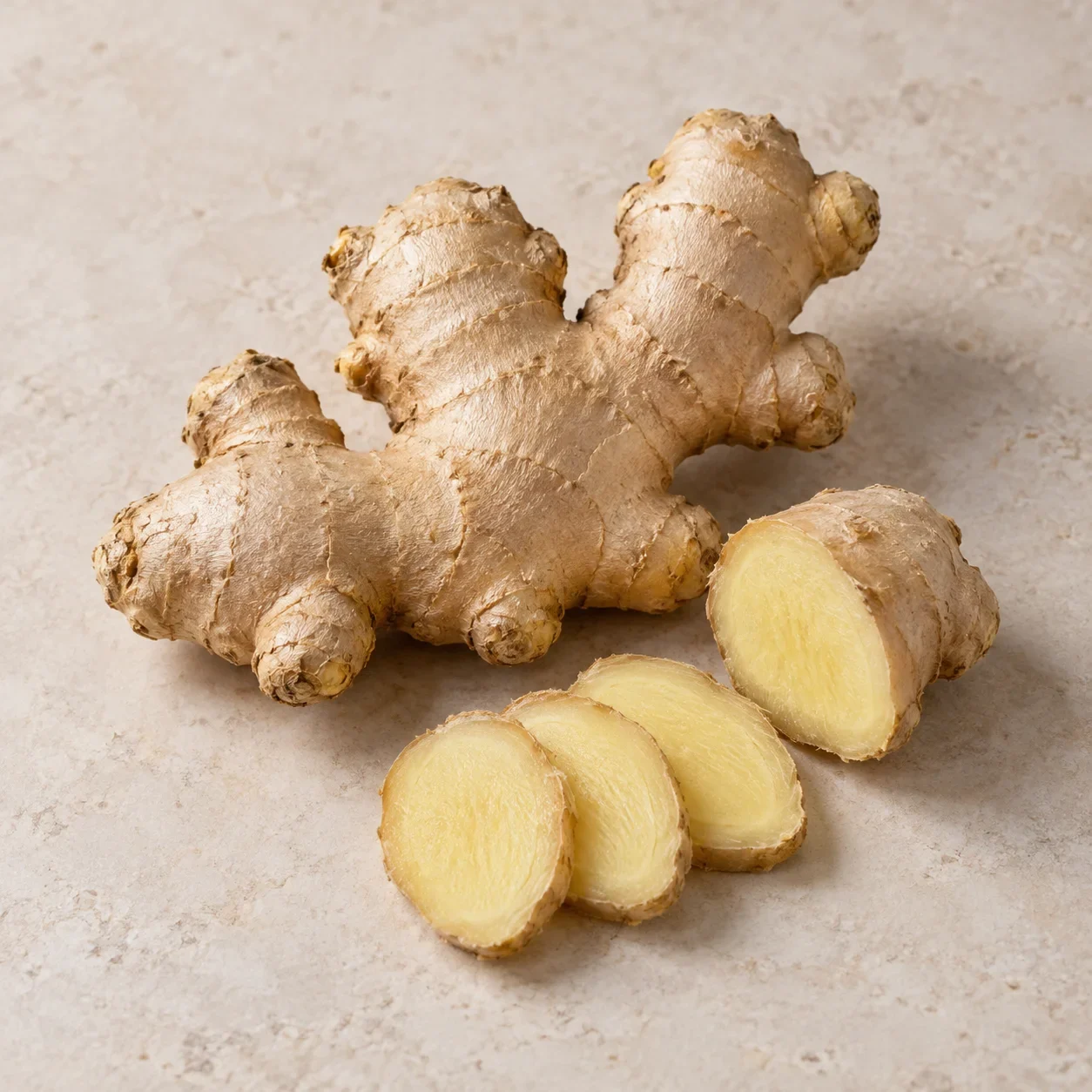
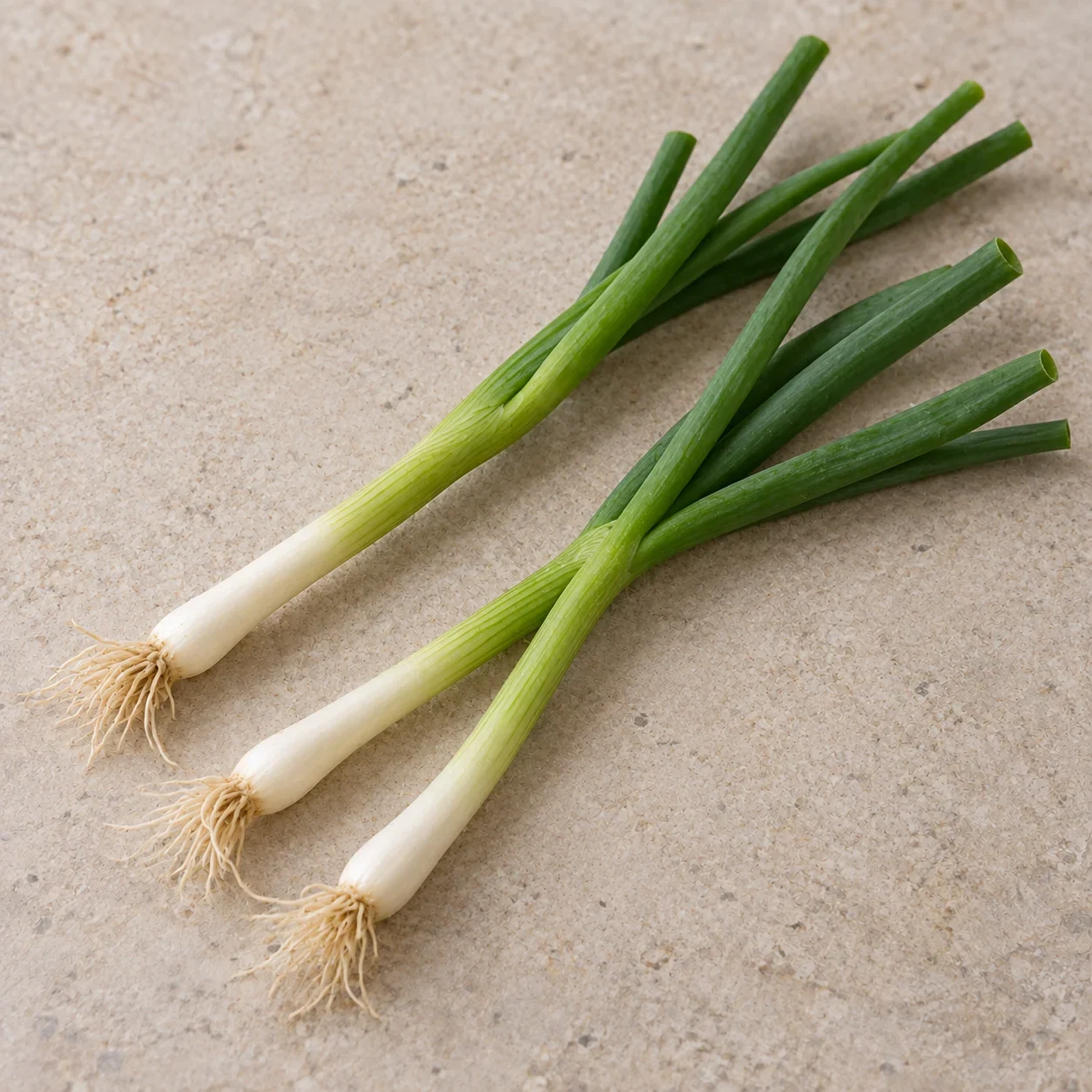
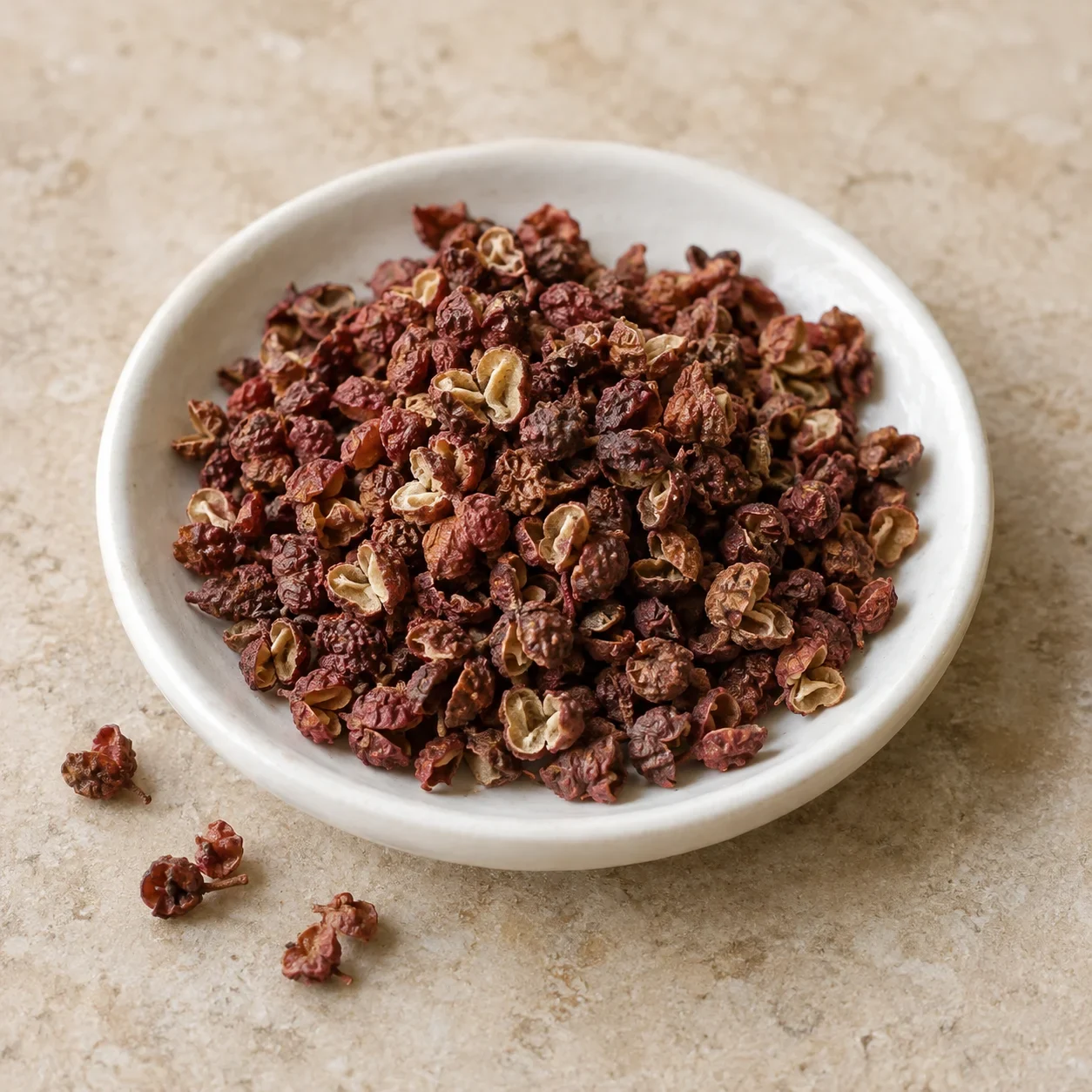
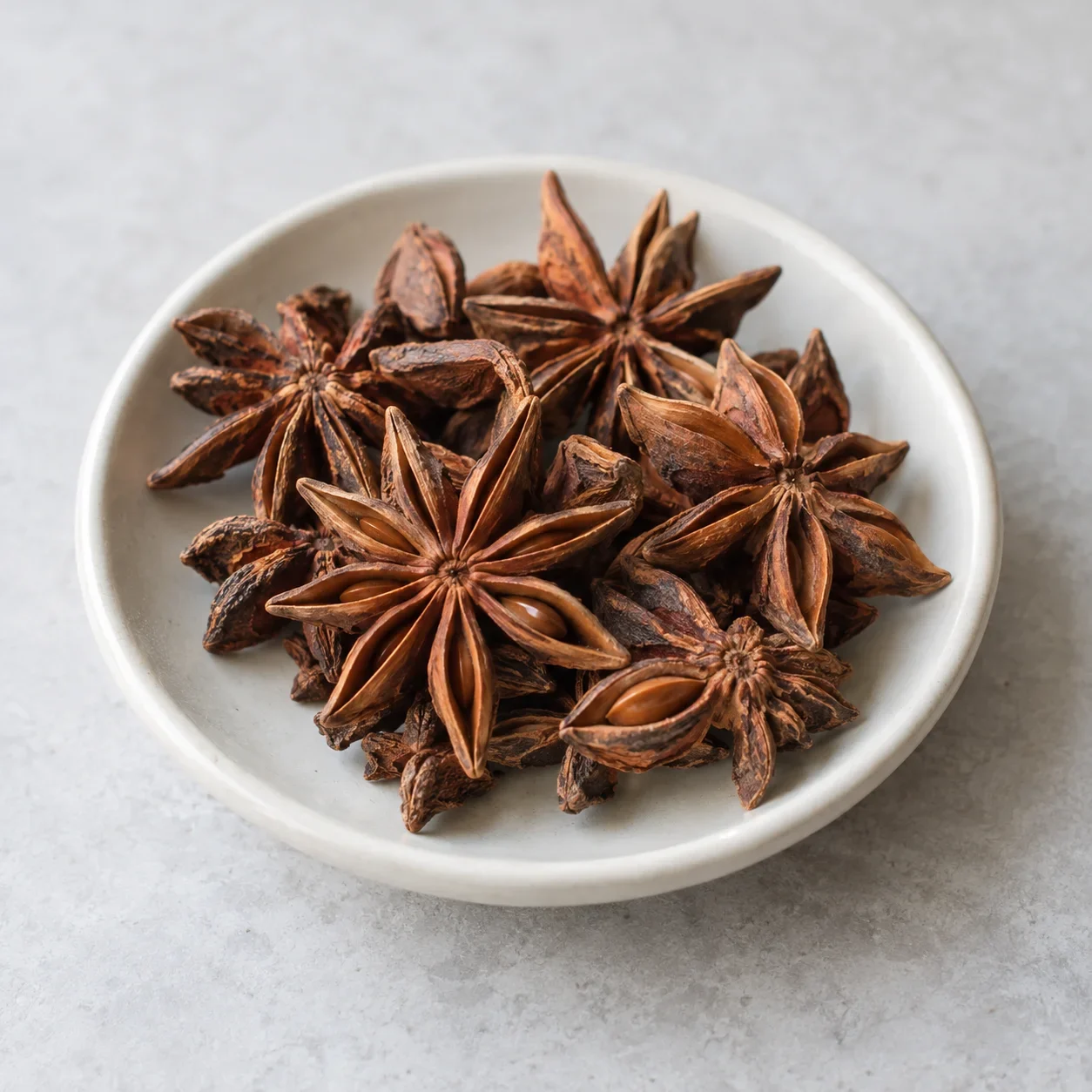
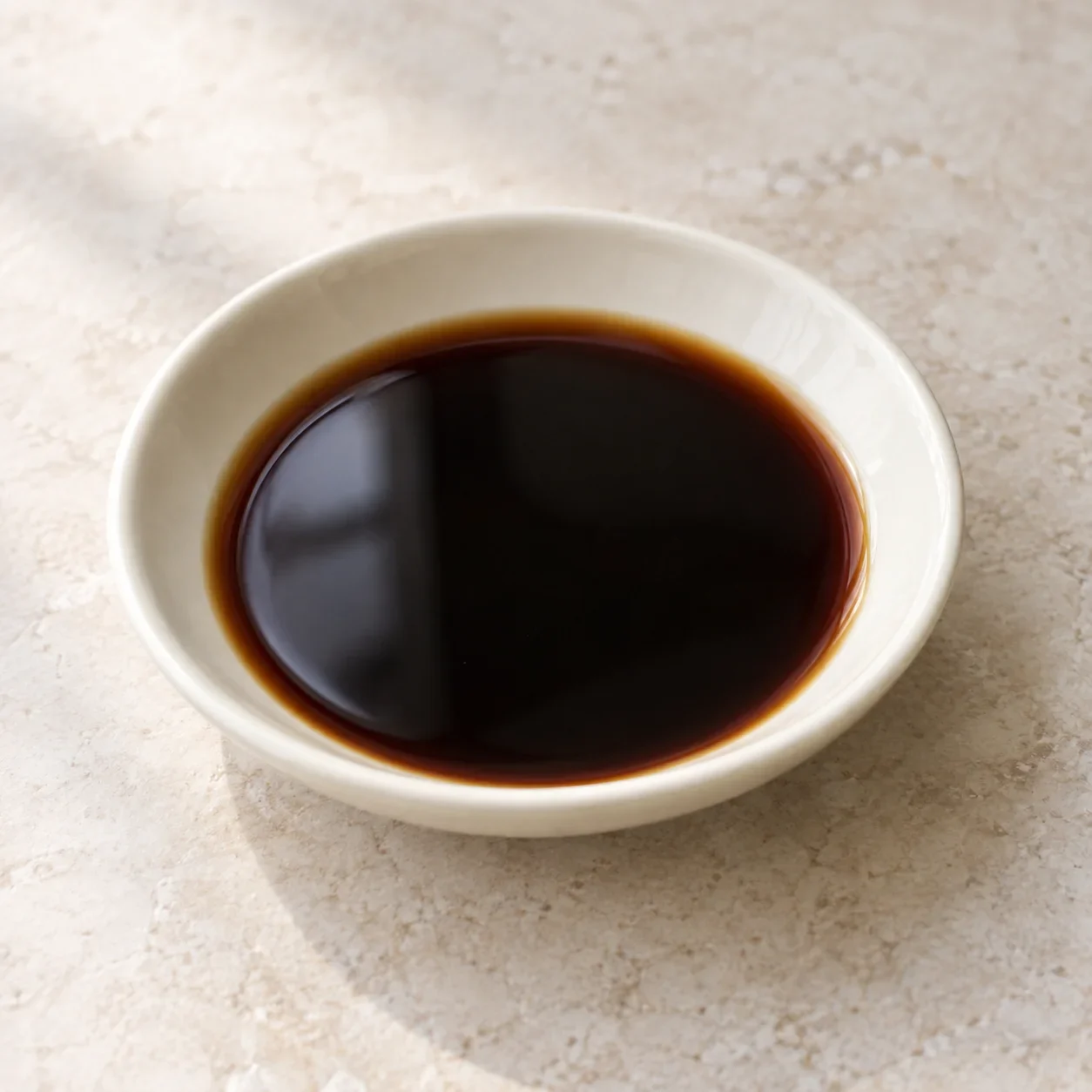
Recipes vary by restaurant.
How does it taste?
Strongly salty and marine, with rich roe.
- Chili heat
- Texture
- Cool, soft translucent flesh and dense creamy roe inside a hard shell.
- How it’s made
- The crab is salt-cured without cooking, then chilled and cut. Salt water is the core preparation; alcohol and aromatics are not universal.
Some versions add baijiu, ginger, scallion, Sichuan pepper or star anise. Vinegar may accompany it. Seasoning and salinity vary.
A CONNECTION TO PLACE
Origin & regional roots
Its origins are linked to Zhejiang.
About this regional connection
Zhejiang: Ningbo salt-cured swimming-crab version.
Ask if they have it first
请问你们有红膏炝蟹吗?
Do you have this item?
A LITTLE SOMETHING TO READ
Story & history
A Ningbo cold-dish tradition
Roe-rich swimming crab is associated with Ningbo’s winter and festive tables. Its concentrated saltiness is traditionally paired with plain rice or rice in hot water, rather than treated as a full meal alone.