At the table
Let the tea cool slightly and sip, leaving the leaves behind.
Contains caffeine. Check additions if avoiding particular ingredients.
Raw and ripe tea differ in processing and taste. Age and brewing also affect the cup; 菊普 adds chrysanthemum.
Know what you’re trying.
Prepared tea; no fixed brand, package size or strength.
Ingredients
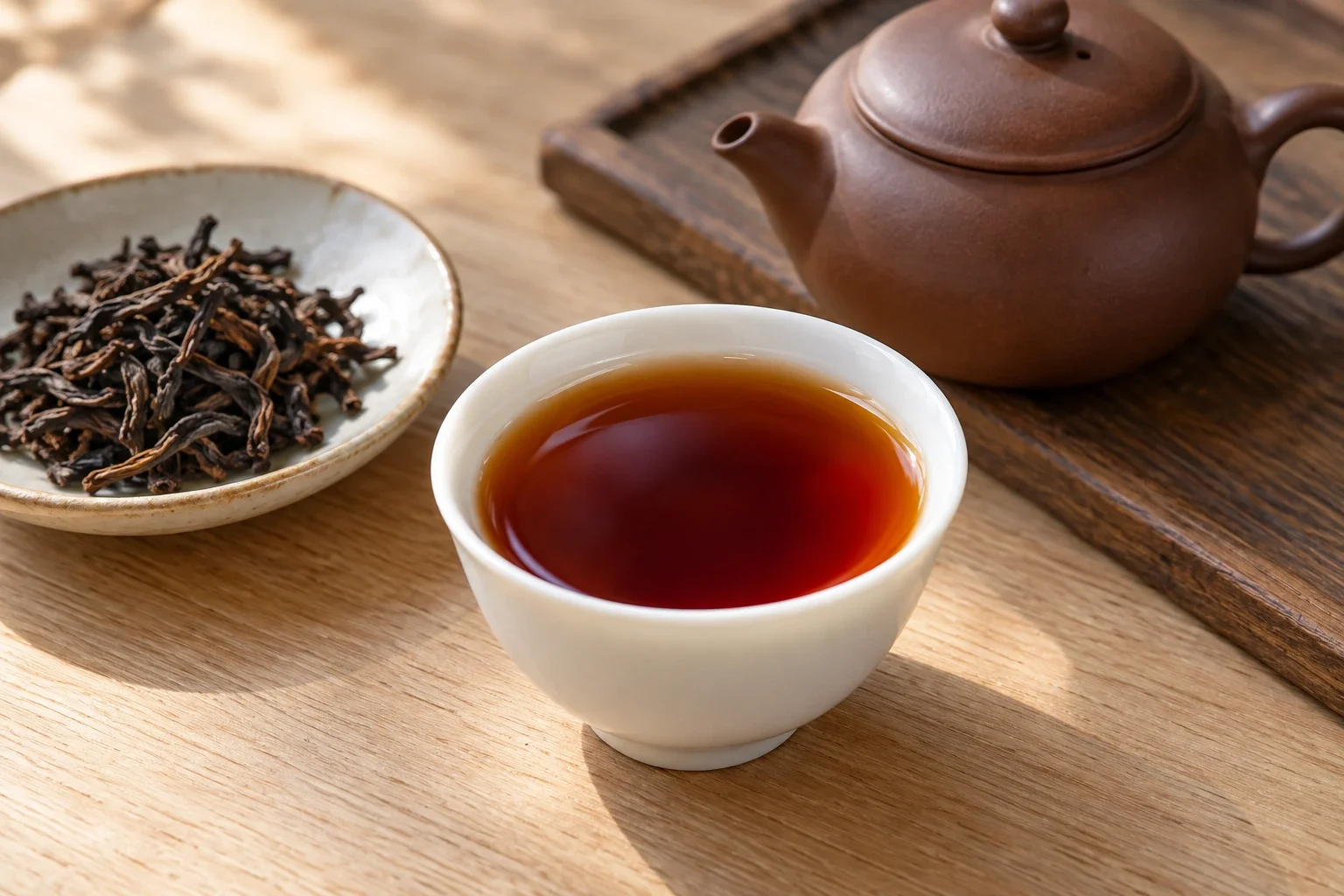
Pu’er tea leaves and water; the pictured version uses ripe pu’er.
Origin & regional roots
Yunnan
Associated with Yunnan.
Explore related drinksAsk if they have it first
请问你们有普洱茶吗?
Do you have this item?
A LITTLE SOMETHING TO READ
Story & history
Ask which style
This account describes a tradition or story, rather than an established historical fact.
Sheng pu’er develops during storage without the accelerated pile-fermentation used for shou pu’er. Young sheng can be brisk and astringent; shou is often darker and mellower. These are processing styles, not promises of a particular age or quality.