
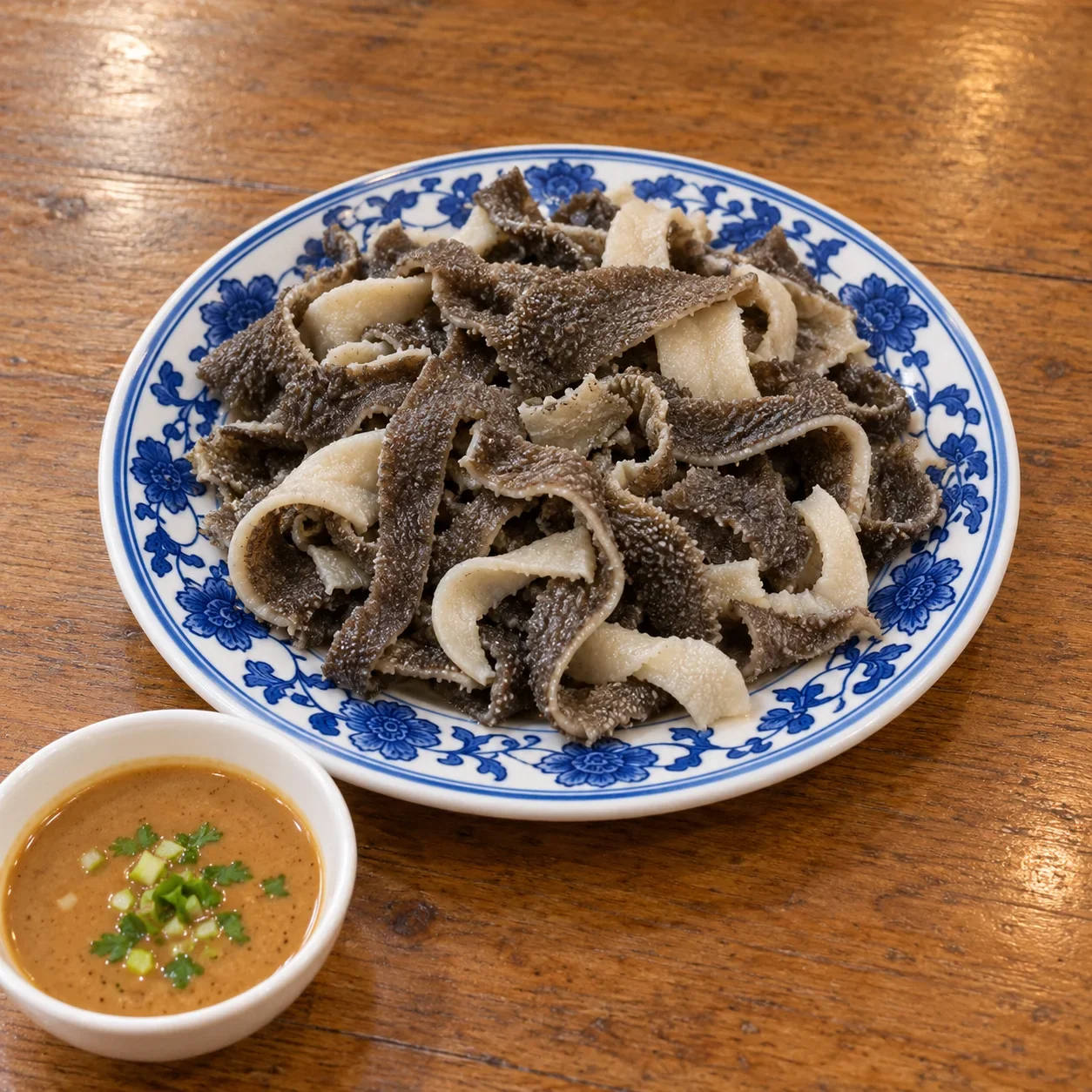
At the table
Dip a piece of cooked tripe in the sauce and eat it while warm. Ask for chili oil separately if you prefer no chili heat.
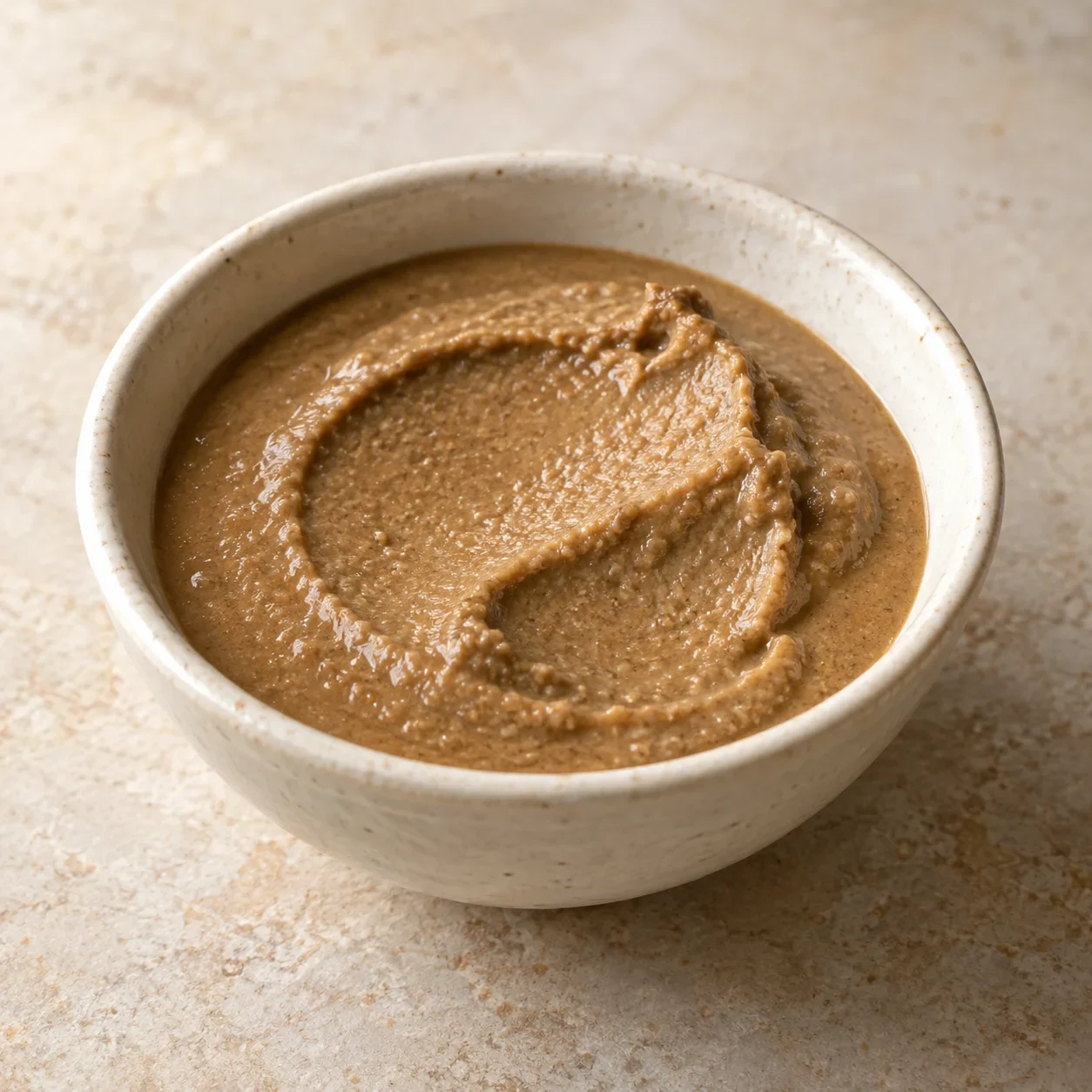
The dipping sauce commonly contains sesame; check its ingredients if you have allergies.
Beef and sheep tripe and different stomach cuts are used; ask which cut is being served.
GET TO KNOW THE DISH
What goes into it?
Explore some key ingredients below. Preparations may use additional seasonings and ingredients.
Beef and lamb tripe, as well as different stomach cuts, are used. The blanching time and dipping sauce vary with the cut and preparation.
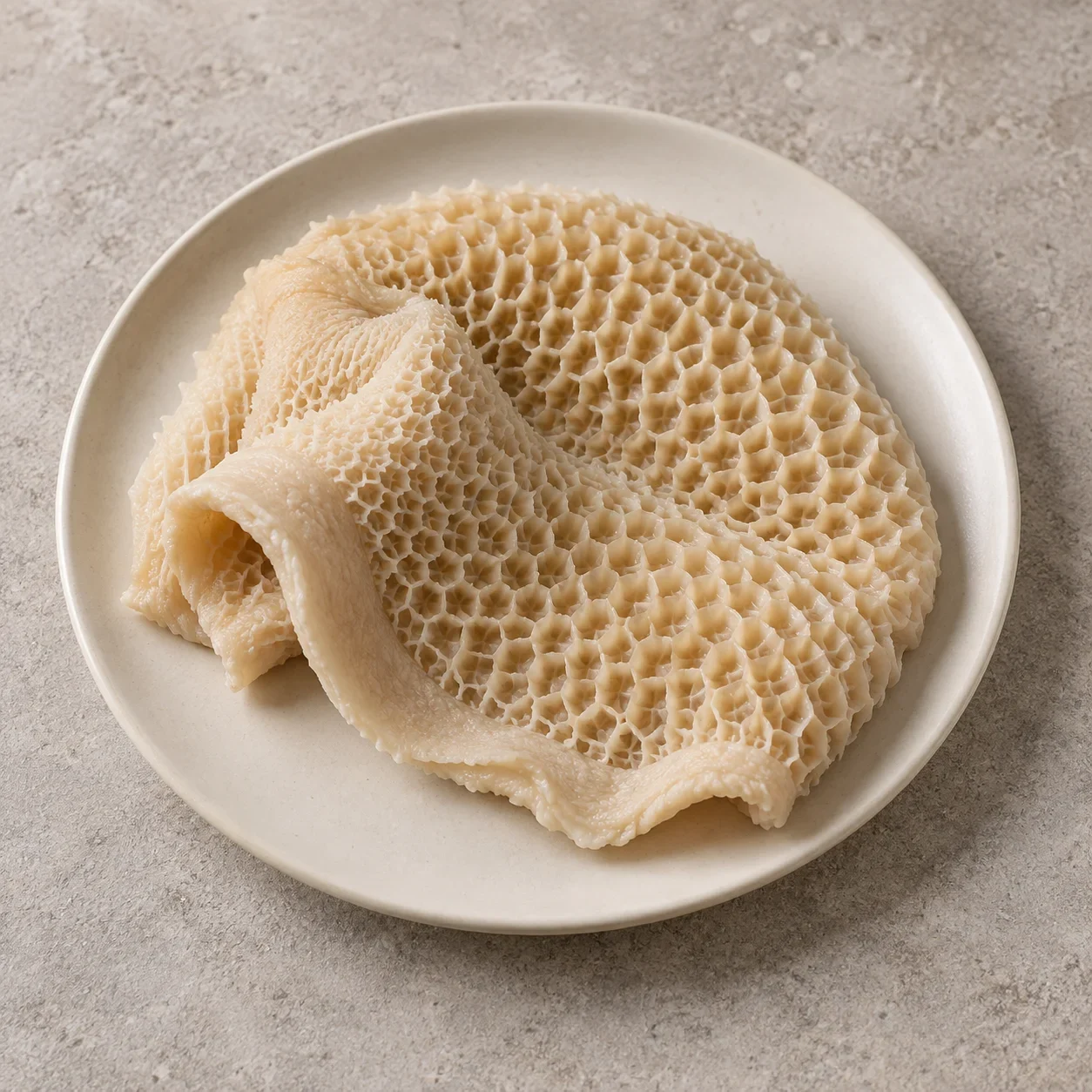
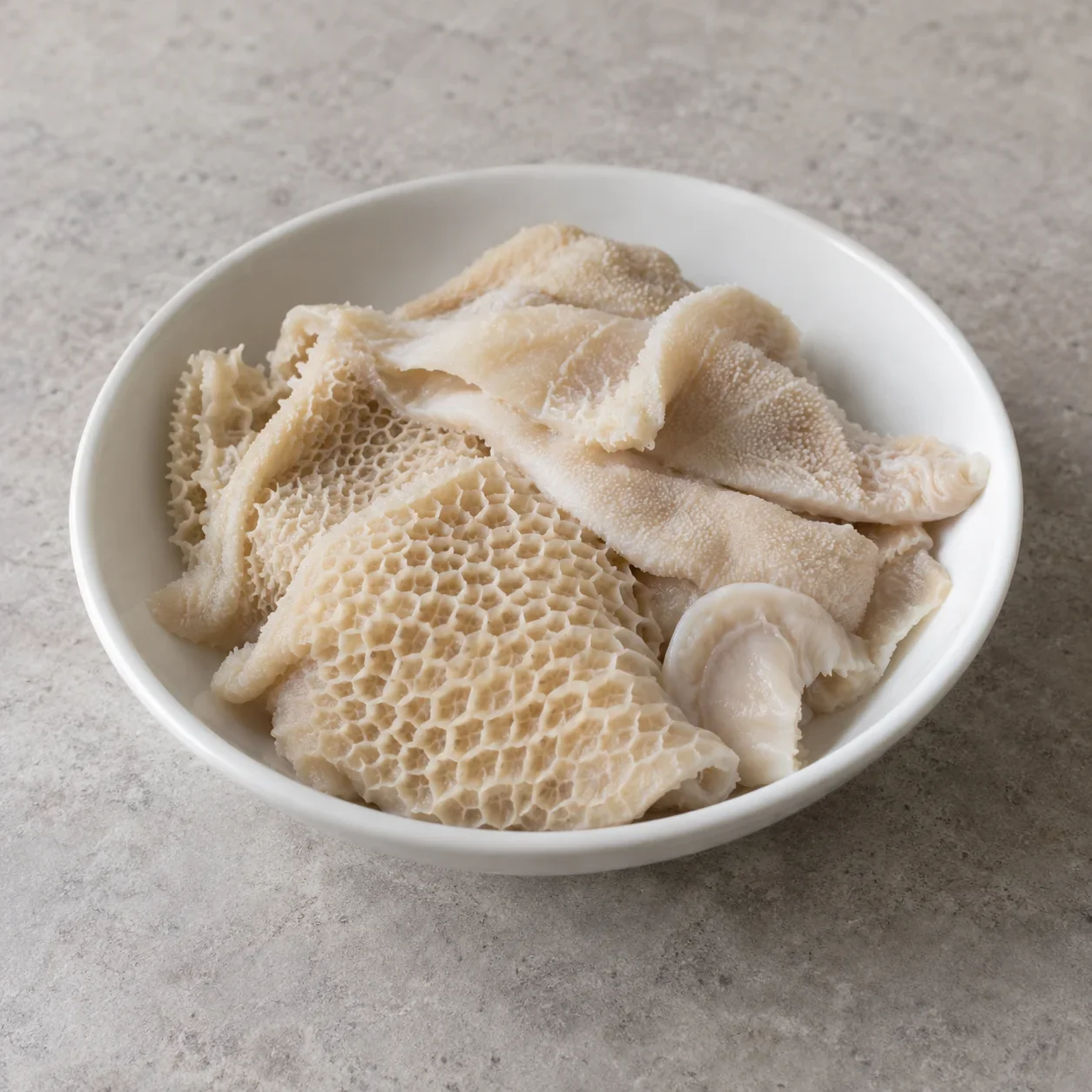
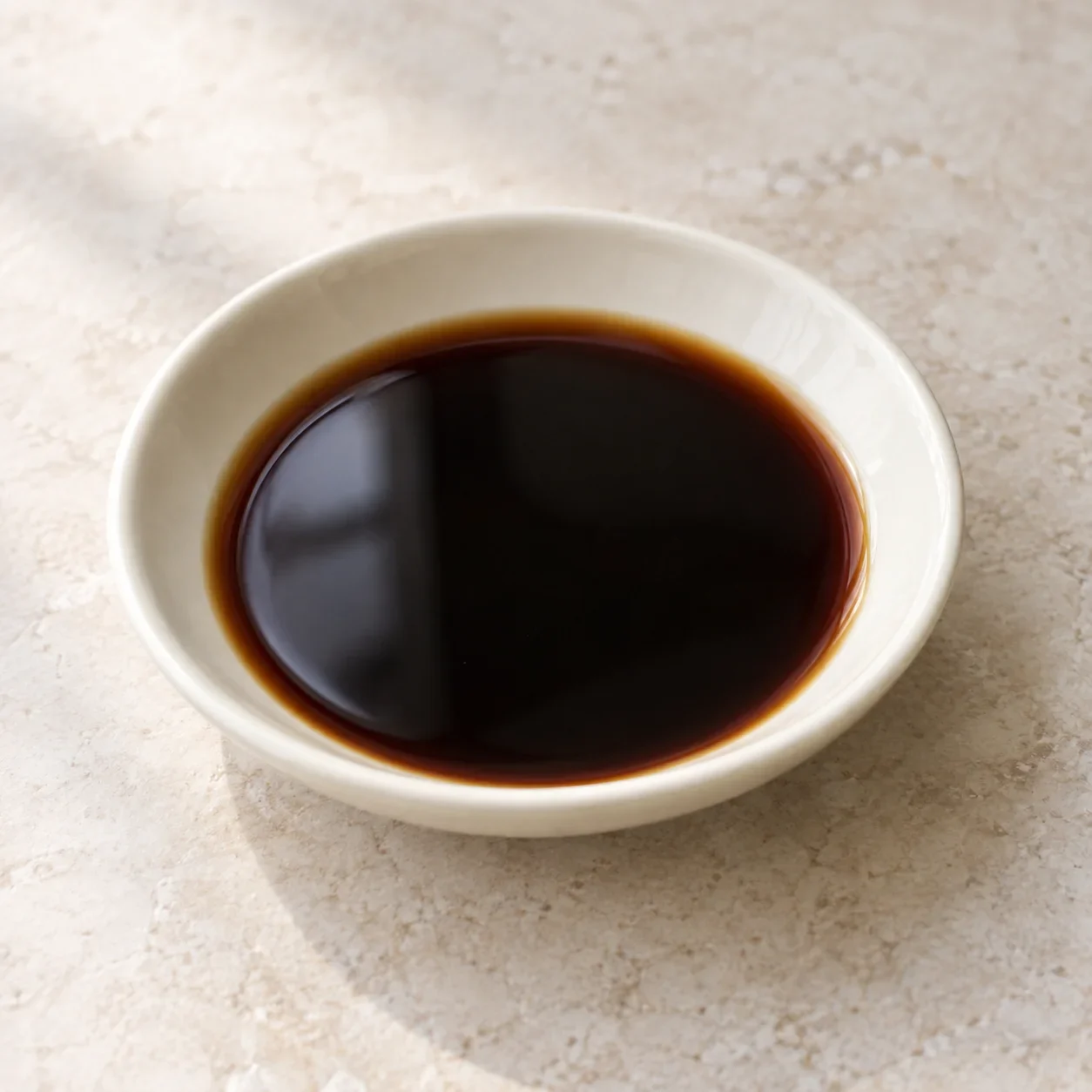
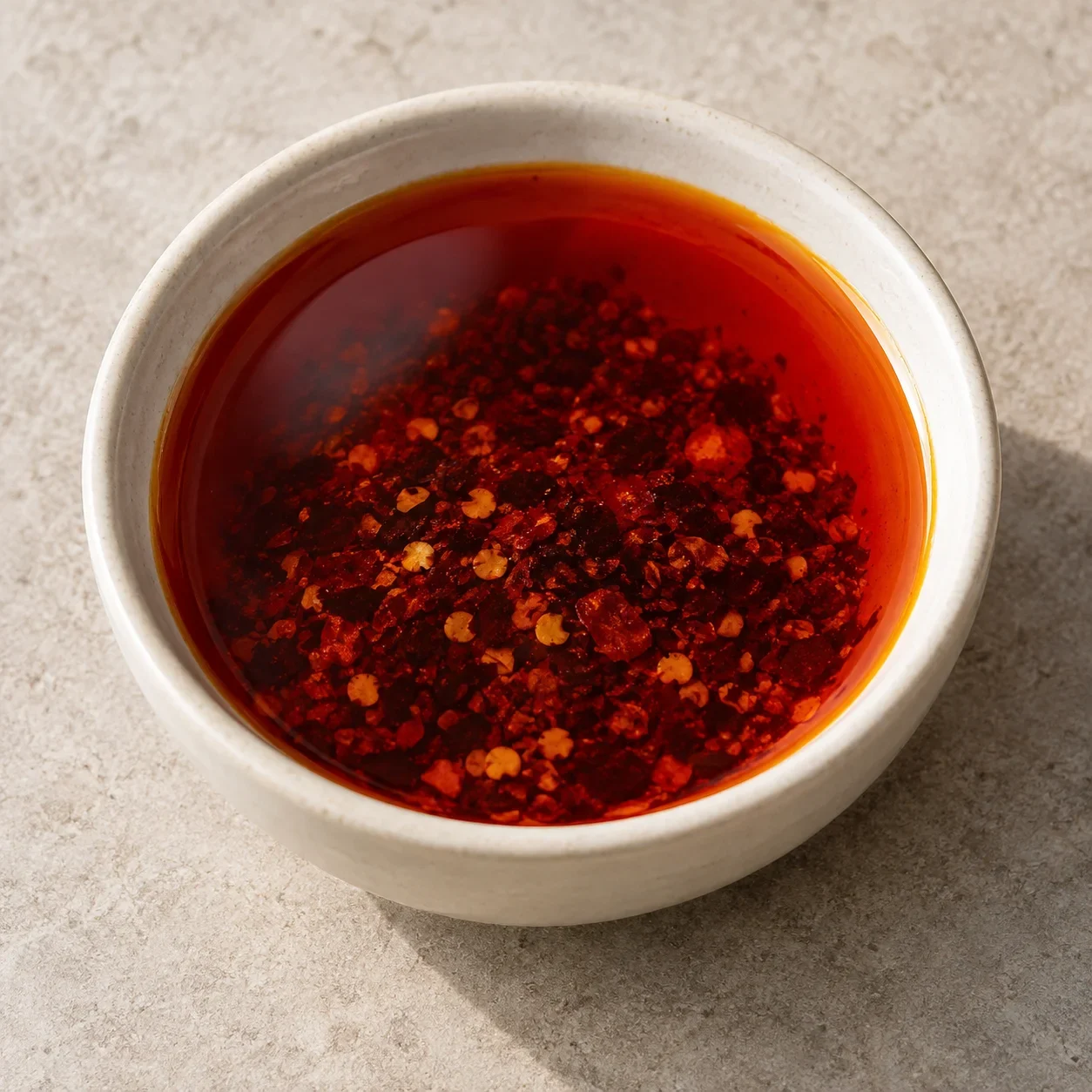
Recipes vary by restaurant.
How does it taste?
Sesame paste, vinegar, chili oil, fermented bean curd sauce, herbs or scallions may be used in the dipping sauce. Chili is optional, so a serving need not be hot.
- Chili heat
- Texture
- When briefly cooked to suit the cut, the tripe can be crisp and tender. Texture varies with the stomach cut and cooking time.
- How it’s made
- Fresh beef or lamb tripe is cleaned, sliced, and briefly blanched in rapidly boiling water. It is eaten with a dipping sauce that may include sesame paste, vinegar, chili oil and other condiments.
Beef and lamb tripe, as well as different stomach cuts, are used. The blanching time and dipping sauce vary with the cut and preparation.
A CONNECTION TO PLACE
Origin & regional roots
Associated with Beijing.
About this regional connection
Beijing: Two Beijing Tourism guides list Baodu as a Beijing snack; one also mentions Tianjin. Not exclusive-origin evidence.
Ask if they have it first
请问你们有爆肚吗?
Do you have this item?
A LITTLE SOMETHING TO READ
Story & history
Baodu: a writer’s first taste of home after returning to Beijing
For writer Liang Shiqiu, baodu was a taste of home he sought as soon as he returned to Beijing from abroad. He recalled leaving his luggage at the East Station and walking to a restaurant on Coal Market Street for three preparations: salt-seared, oil-fried and broth-blanched tripe. The scene preserves one diner’s affection for the dish and shows that “baodu” can refer to more than one cooking style.