
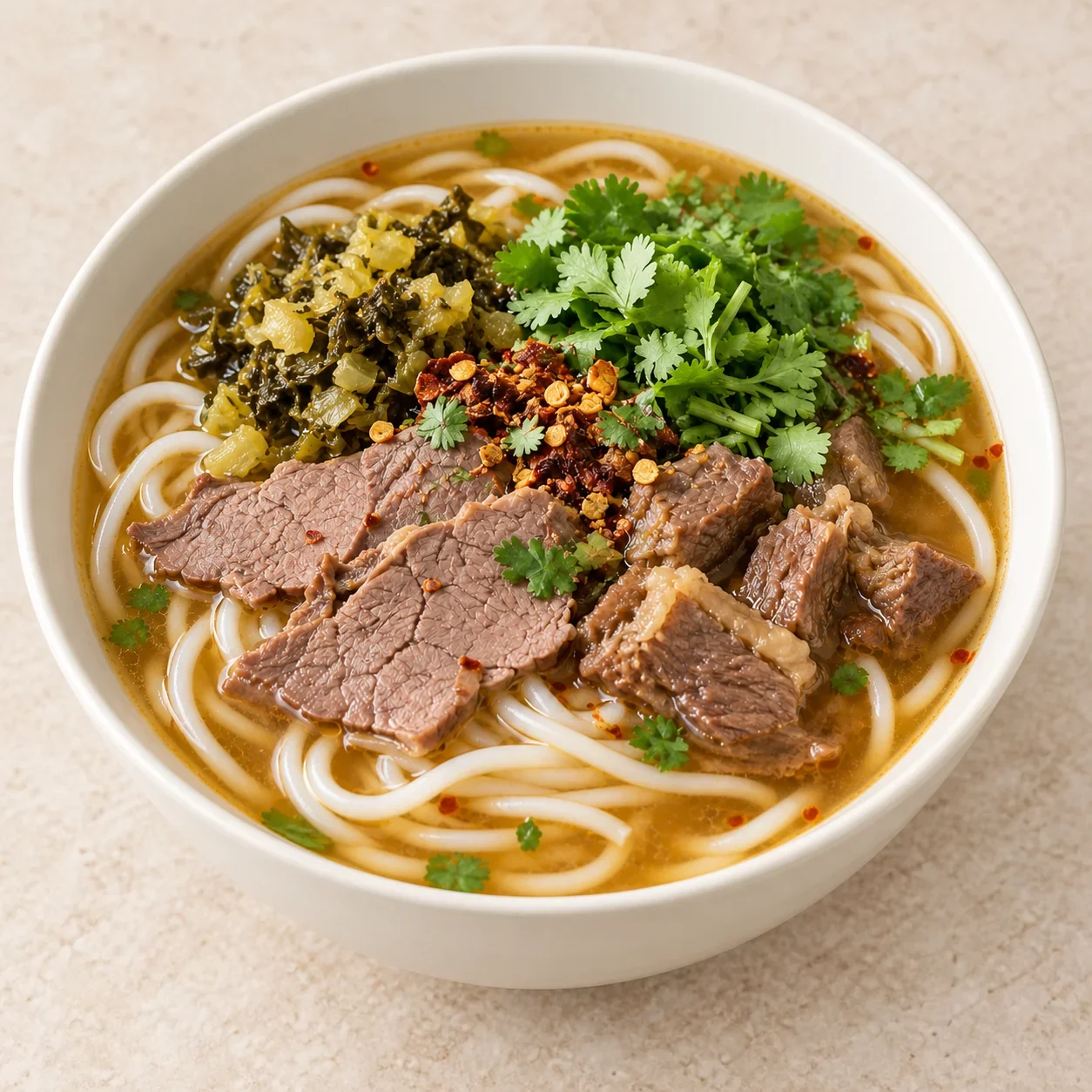
GET TO KNOW THE DISH
What goes into it?
Explore some key ingredients below. Preparations may use additional seasonings and ingredients.
Sour-soup and red-braised flavors are alternatives to the original broth.
Typical ingredients
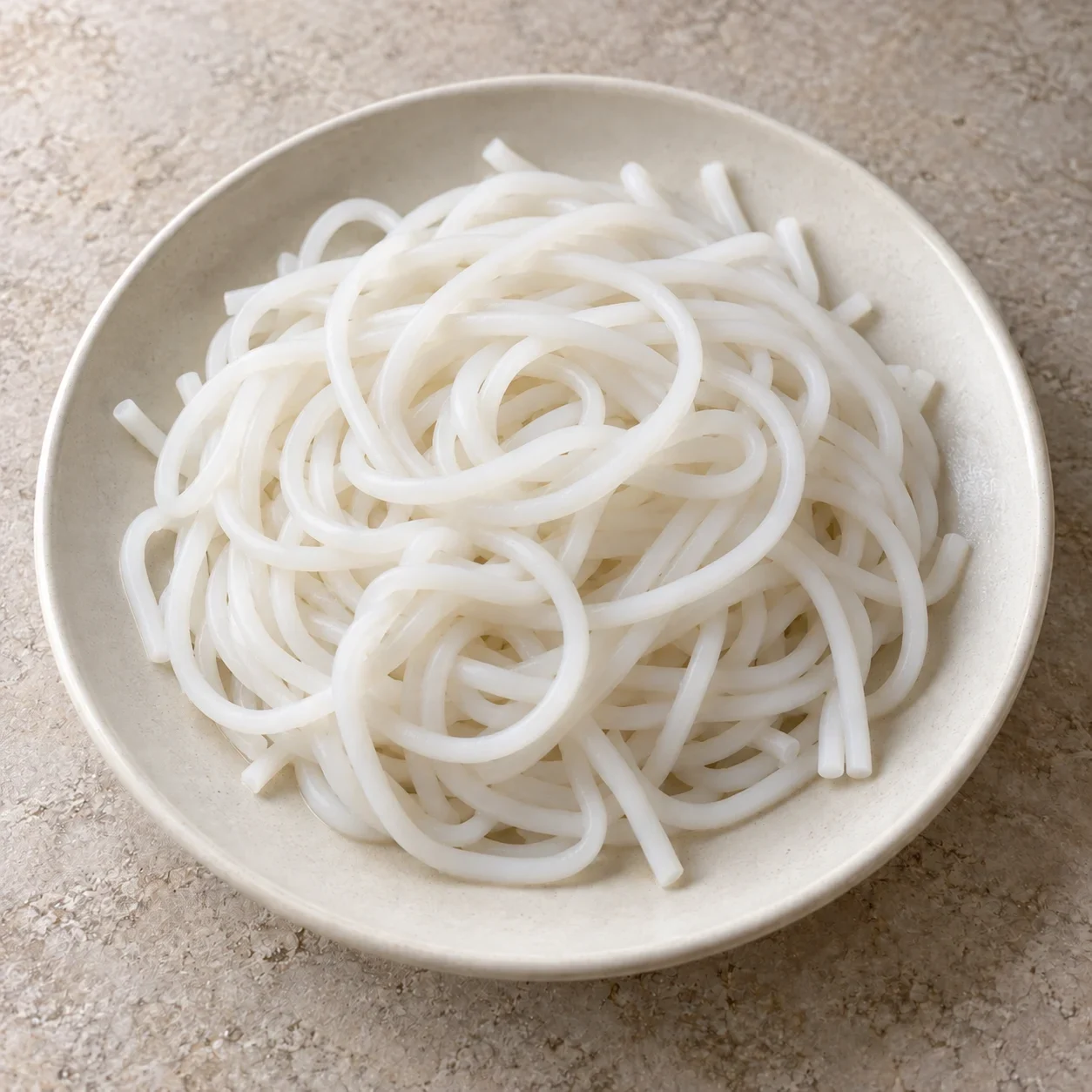
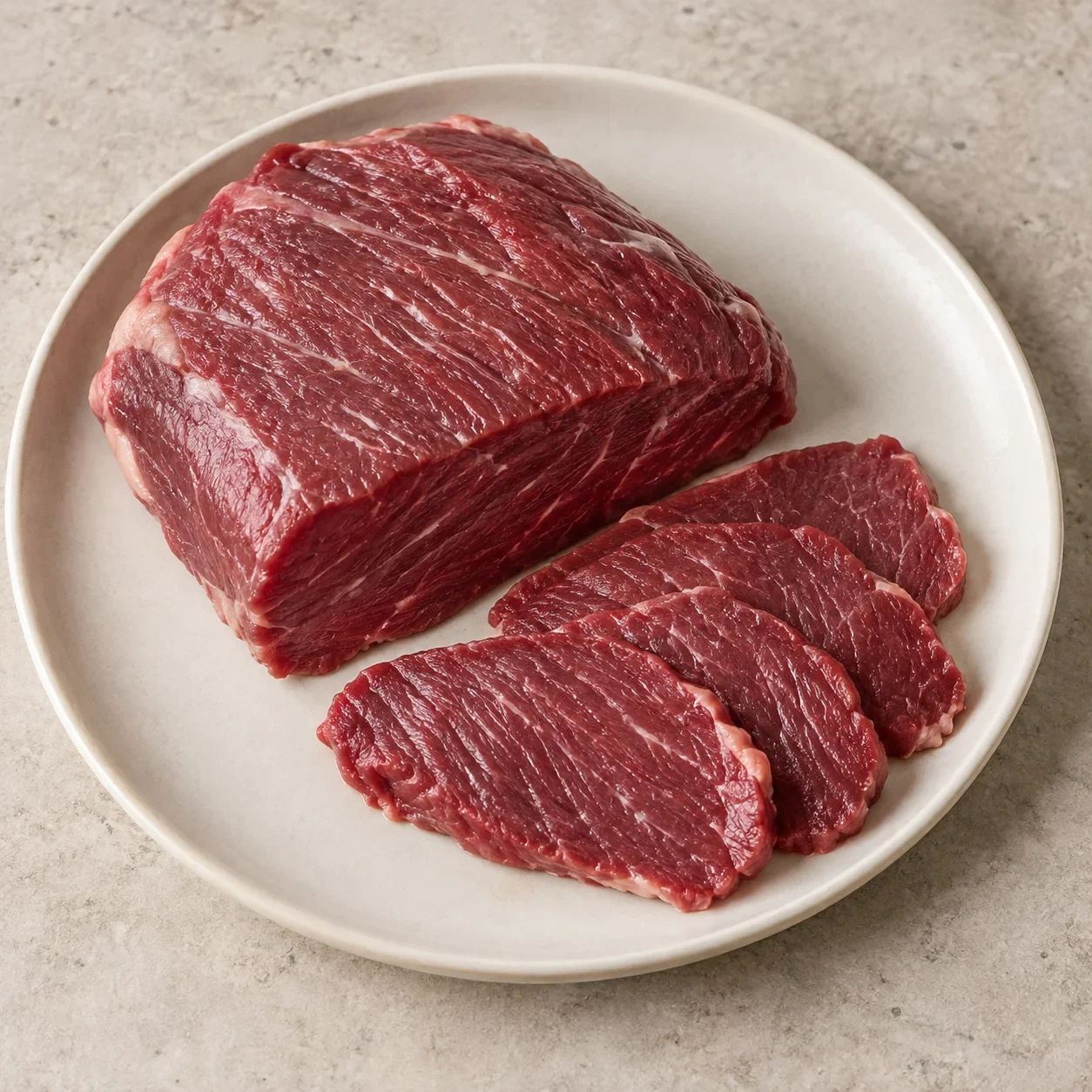
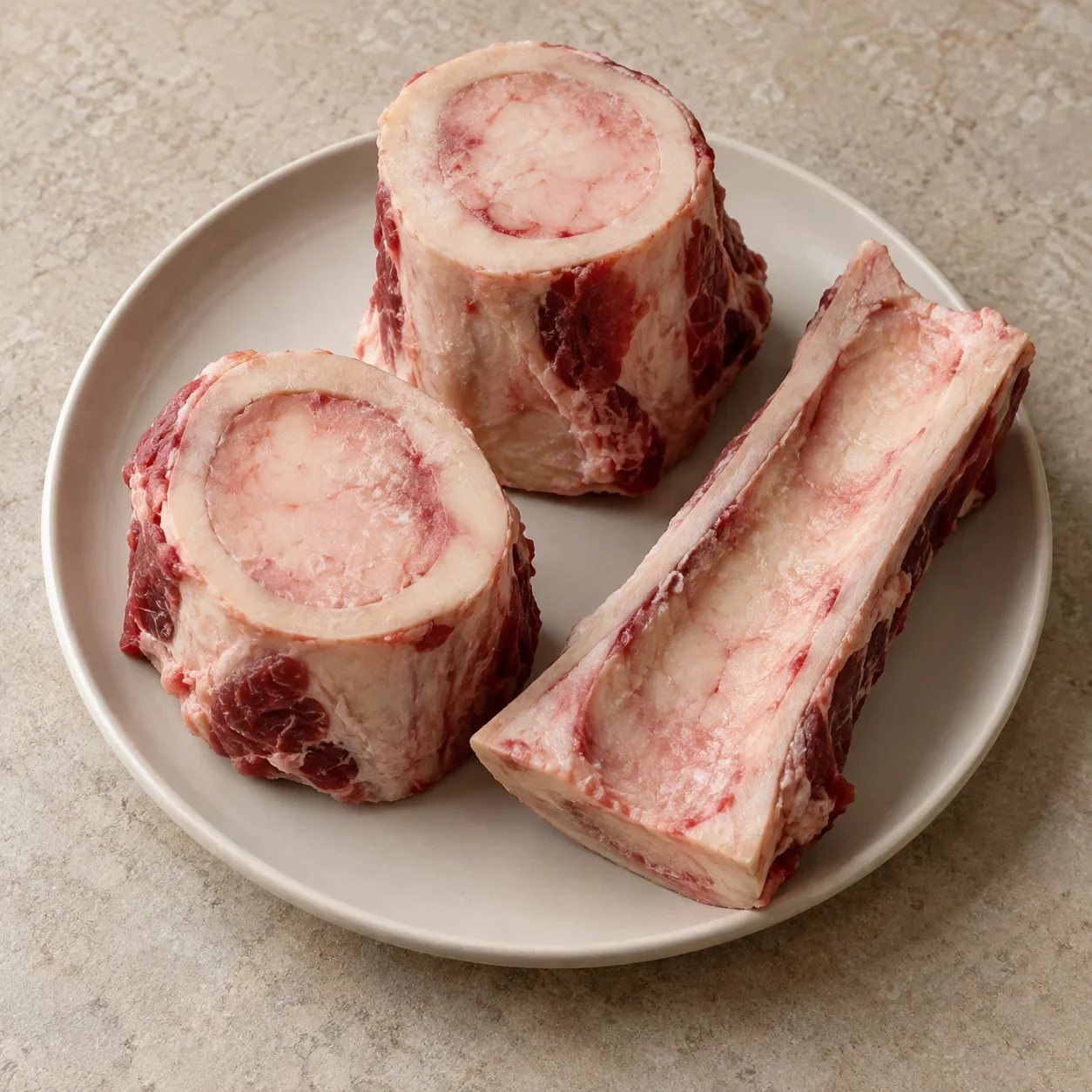
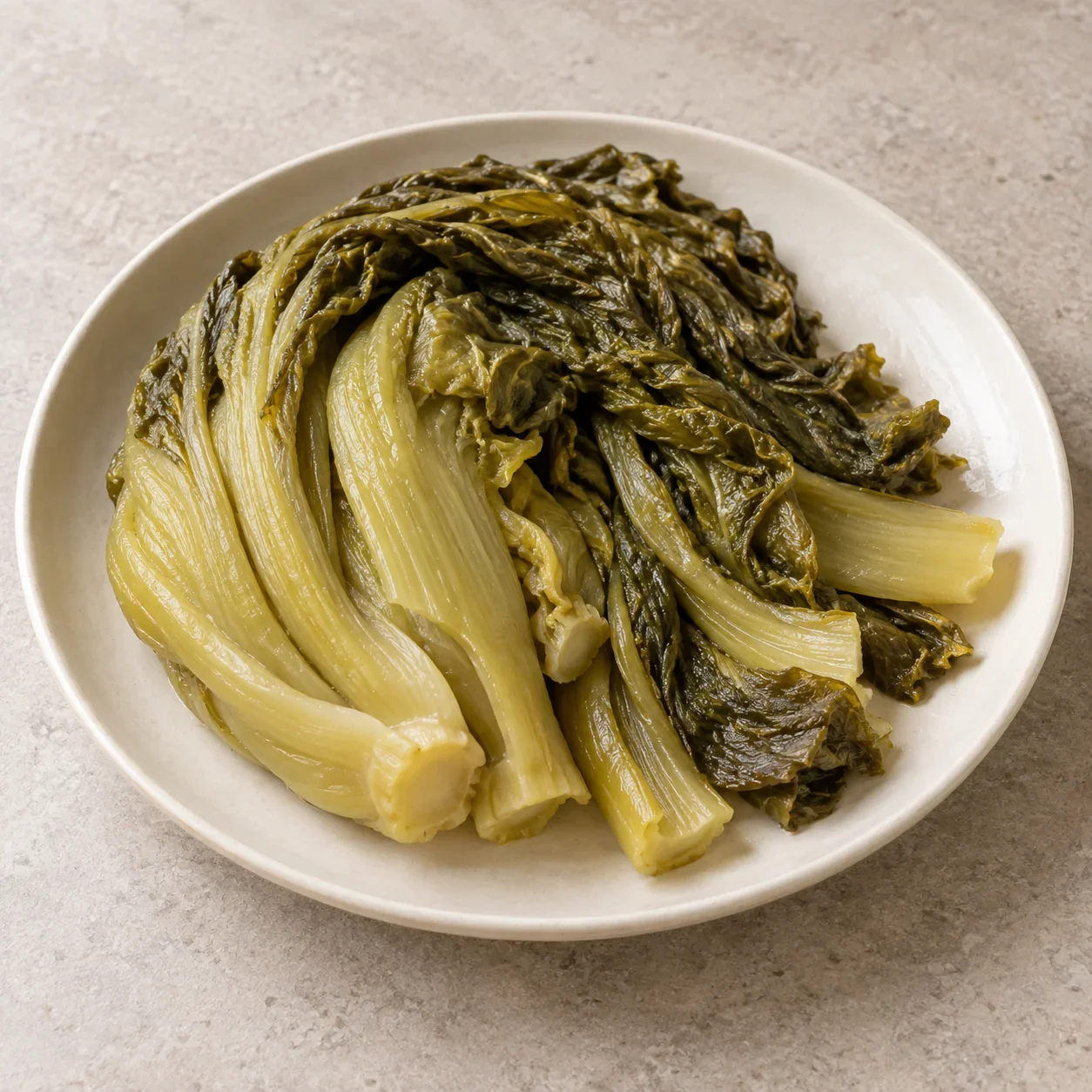
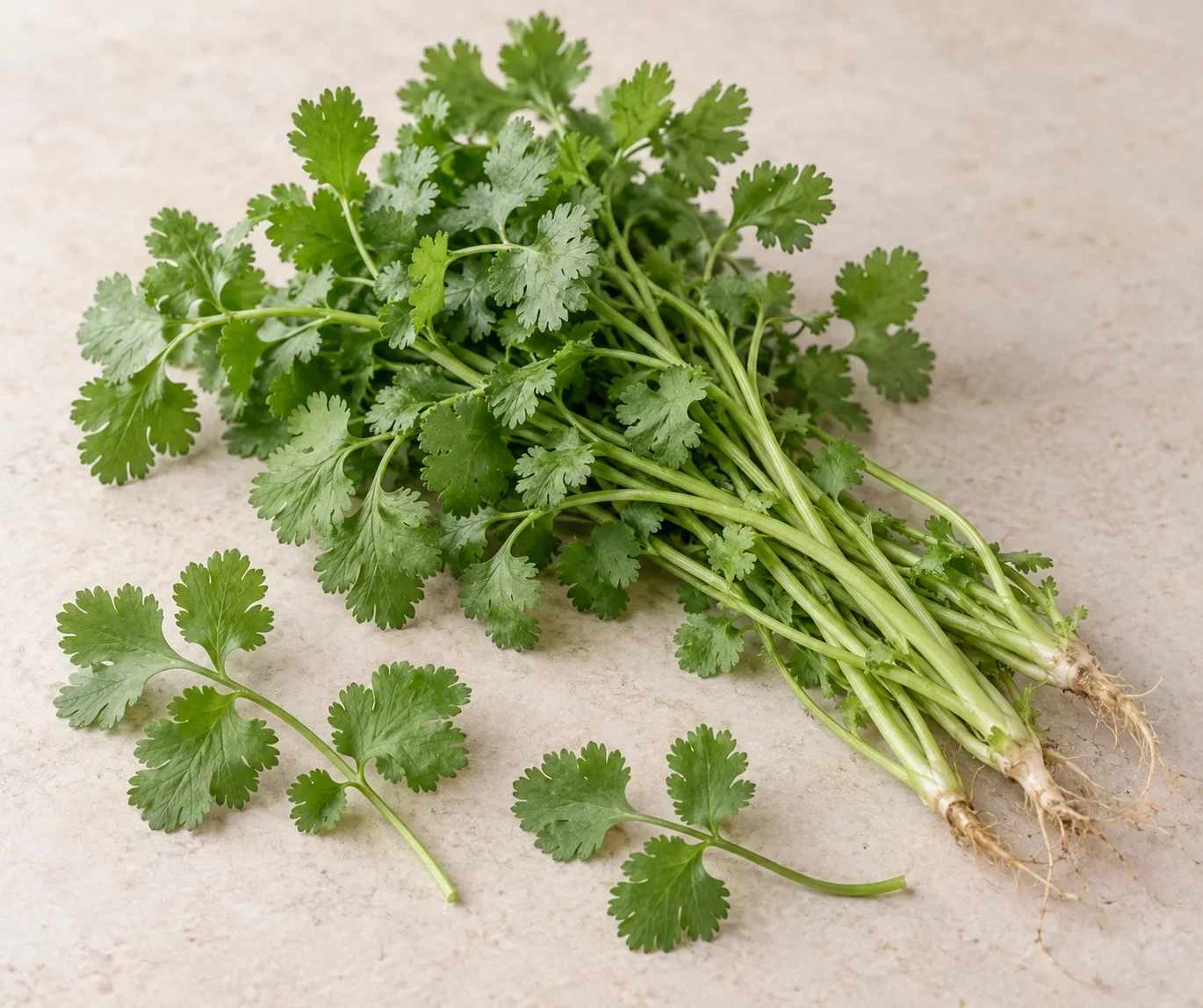
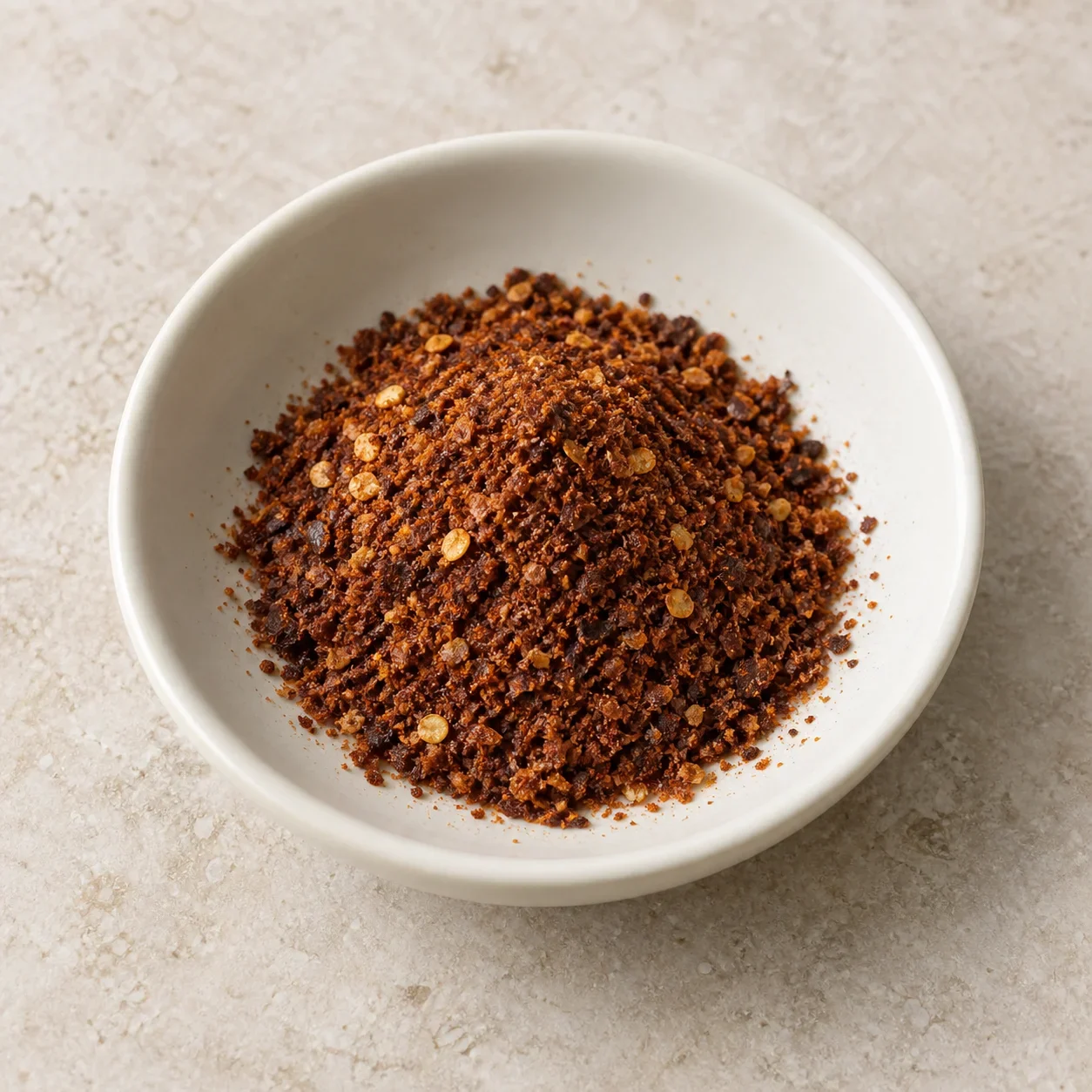
Recipes vary by restaurant.
How does it taste?
Beef savor with pickled and toasted-chili accents.
- Chili heat
- Texture
- Smooth, resilient noodles and soft stewed meat.
- How it’s made
- Slow-cook beef and bones for broth; heat noodles, then add broth and toppings.
Sour-soup and red-braised flavors are alternatives to the original broth.
A CONNECTION TO PLACE
Origin & regional roots
Associated with Guizhou.
Ask if they have it first
请问你们有花溪牛肉粉吗?
Do you have this item?
A LITTLE SOMETHING TO READ
Story & history
From Guiyang’s Beef Rice Noodles to Huaxi Cross Street
Guiyang’s beef rice noodles predate the Huaxi name: a 1942 Guiyang city guide describes Muslim eateries serving rice noodles in beef or mutton broth. The Huaxi chapter came later. In 1976, a beef-noodle stall on Huaxi Cross Street opened as the forerunner of Wangji; Feiwan later opened opposite. The place-name marks a neighborhood chapter in Guiyang’s noodle culture, not the beginning of beef rice noodles in the city.