
At the table
Use chopsticks or a spoon for the soft pieces. Ask whether you are buying a block for cooking or a prepared serving, and check any dip separately.
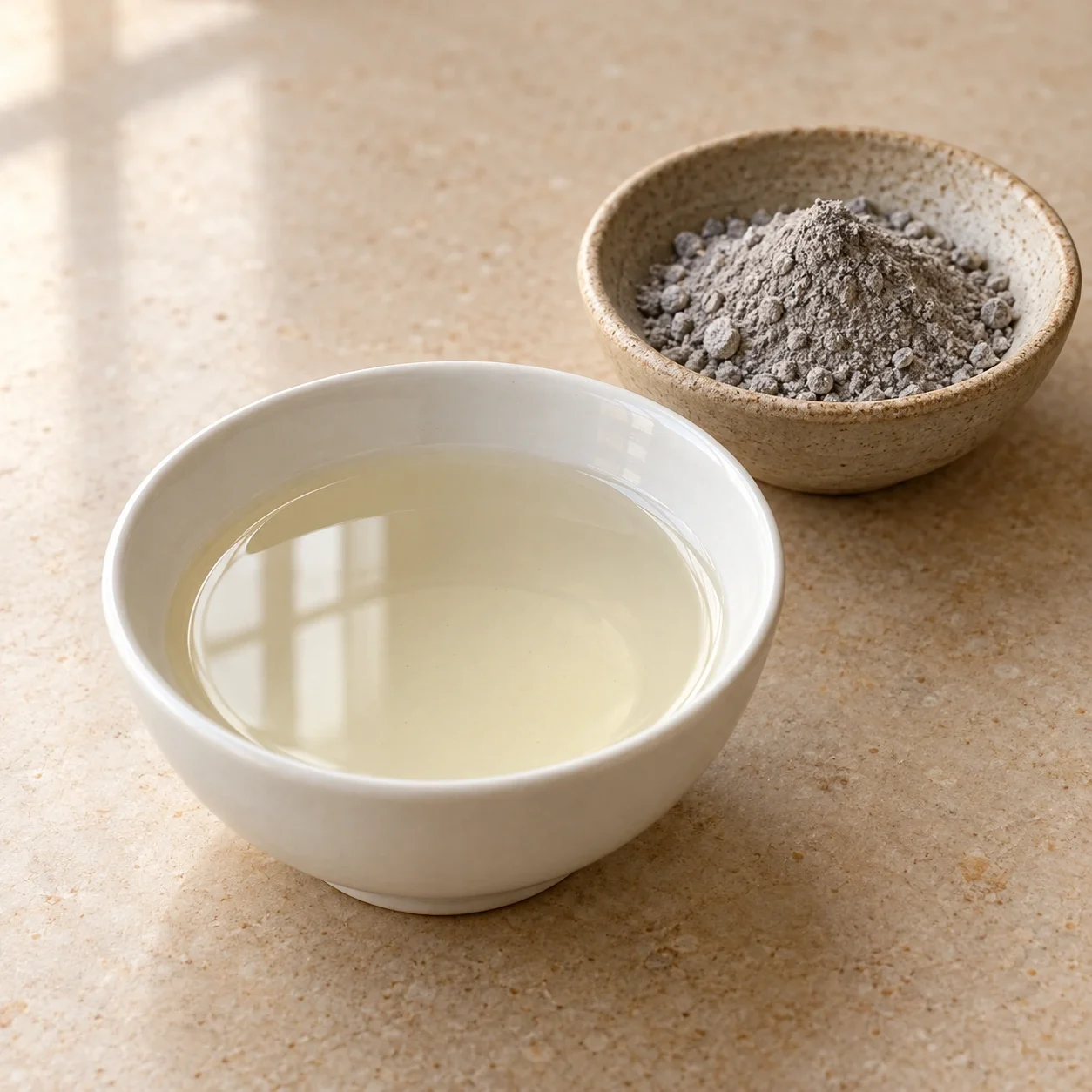
The yellow color does not mean egg. Ask about sauces and frying fat; the plain base does not determine the whole dish. Ash water is a prepared processing ingredient, not a drink.
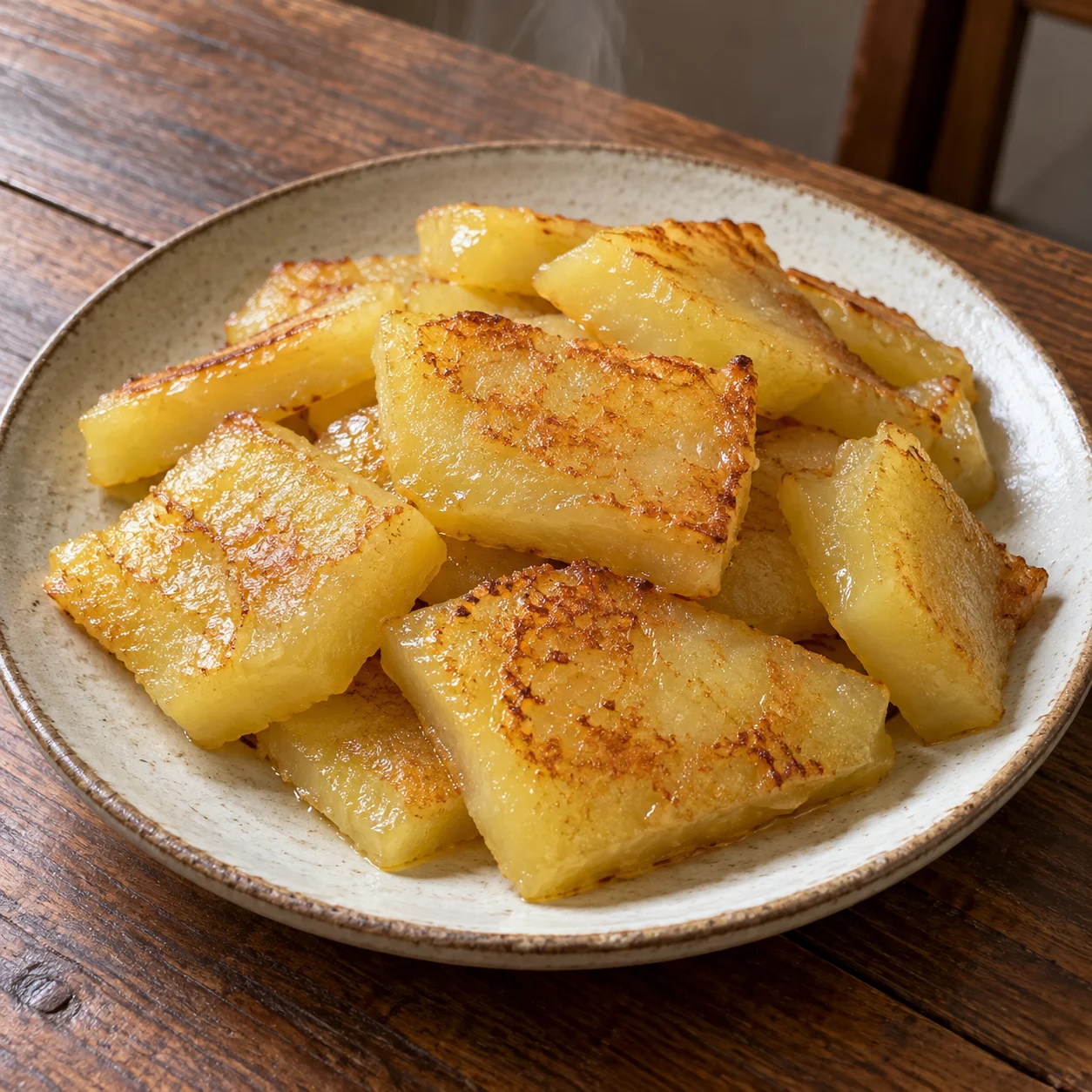
The illustration shows pan-fried rice jelly. The plain rice base is plant-based, but sauces and cooking fat must be checked for vegan or vegetarian eating.
For children who can manage soft pieces, an adult can cut the plain steamed jelly small and cool it; check any dip separately.
Recipes vary. Ask the restaurant about ingredients and serving before you order.
GET TO KNOW THE DISH
What goes into it?
Explore some key ingredients below. Preparations may use additional seasonings and ingredients.
The illustration shows pan-fried rice jelly. The plain rice base is plant-based, but sauces and cooking fat must be checked for vegan or vegetarian eating.
Typical ingredients
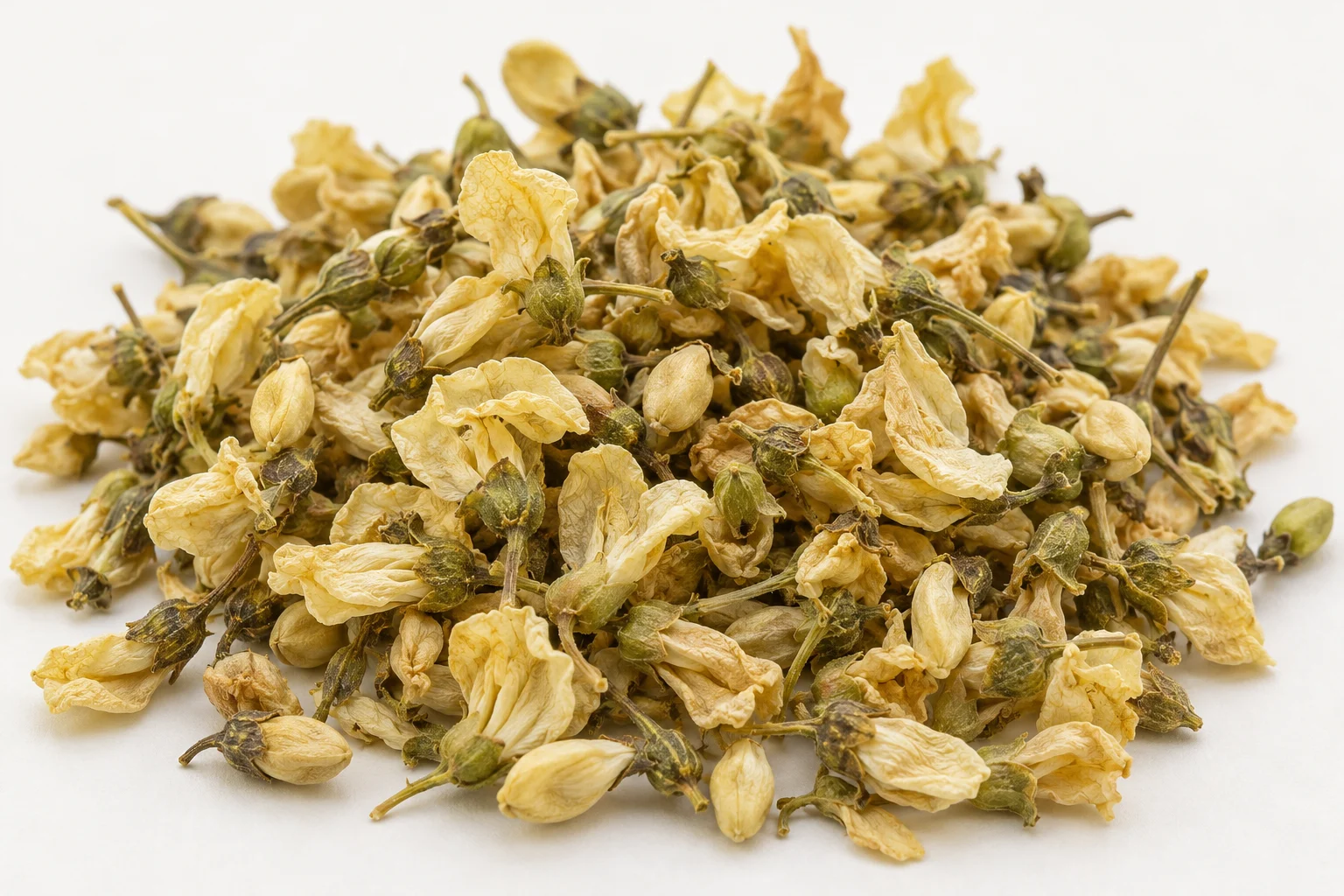
In some versions

Recipes vary by restaurant.
How does it taste?
Mild rice aroma with an alkaline note; plain jelly is not a sweet dessert.
- Chili heat
- Texture
- Smooth, tender and softly springy, cut into cubes or slices.
- How it’s made
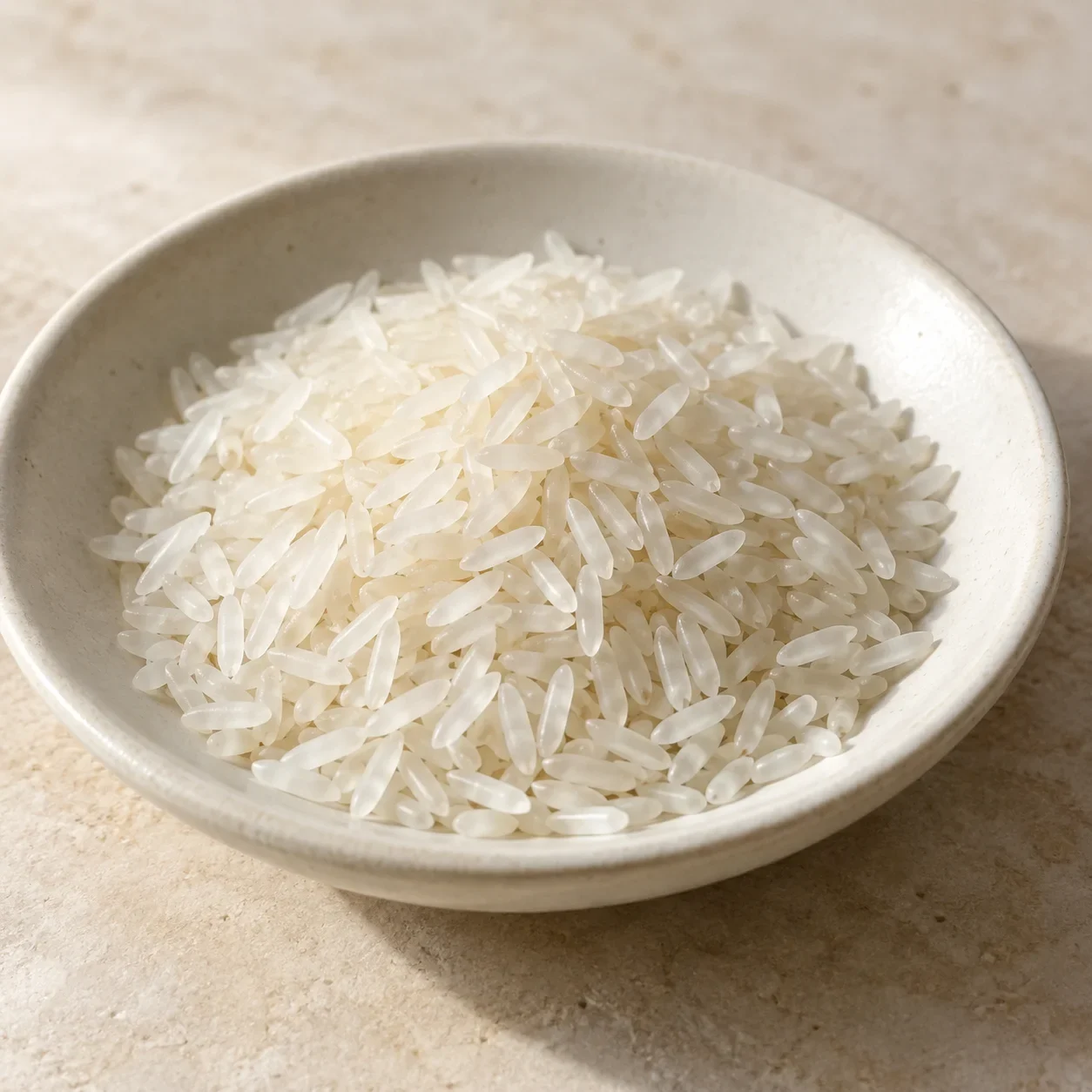
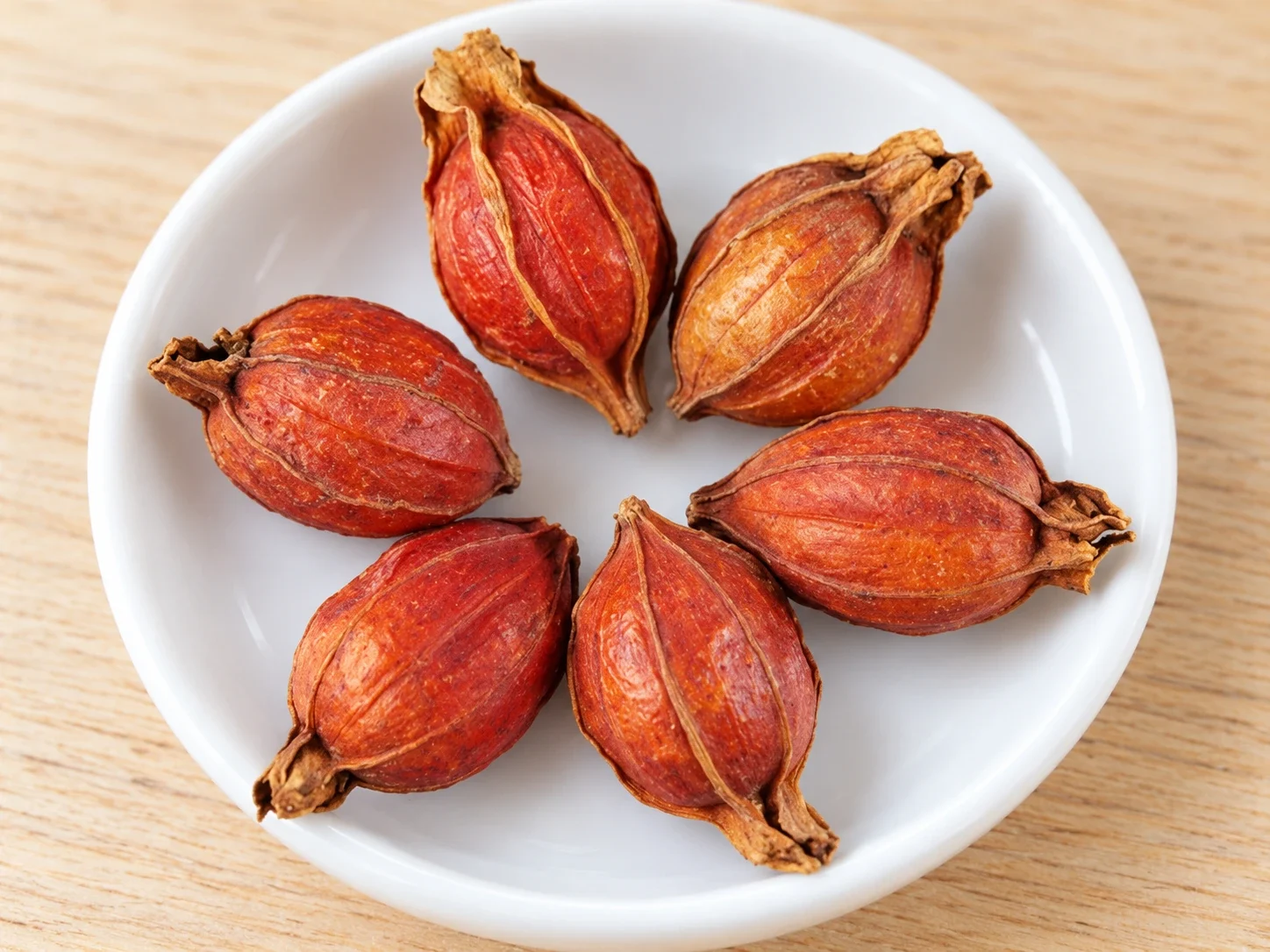
- Soaked rice is ground to slurry with clarified plant-ash water. Gardenia fruit and pagoda-tree buds supply color; the mixture is stirred over heat until cooked, then cooled to set. The plain jelly can be steamed for serving.
The illustration shows pan-fried rice jelly. The plain rice base is plant-based, but sauces and cooking fat must be checked for vegan or vegetarian eating.
A CONNECTION TO PLACE
Origin & regional roots
Associated with Jiangxi.
About this regional connection
Jiangxi: 南康赤土磨浆搅煮成冻的米食品。
Ask if they have it first
请问你们有南康米冻吗?
Do you have this item?
A LITTLE SOMETHING TO READ
Story & history
A stirred rice jelly of Chitu
This account describes a tradition or story, rather than an established historical fact.
In Nankang’s Chitu area, cooks keep rice slurry moving over the stove before letting it set. This produces a soft rice jelly, unlike rice cakes made by pounding steamed grains.