Choose your first bite
- Choose a bowl, a shared dish or a small bite to suit this meal.
- Open the food examples for the Chinese name and a closer look.
- Show the name when ordering, and ask about any ingredients you avoid.
Bread in your hand or bread in a bowl
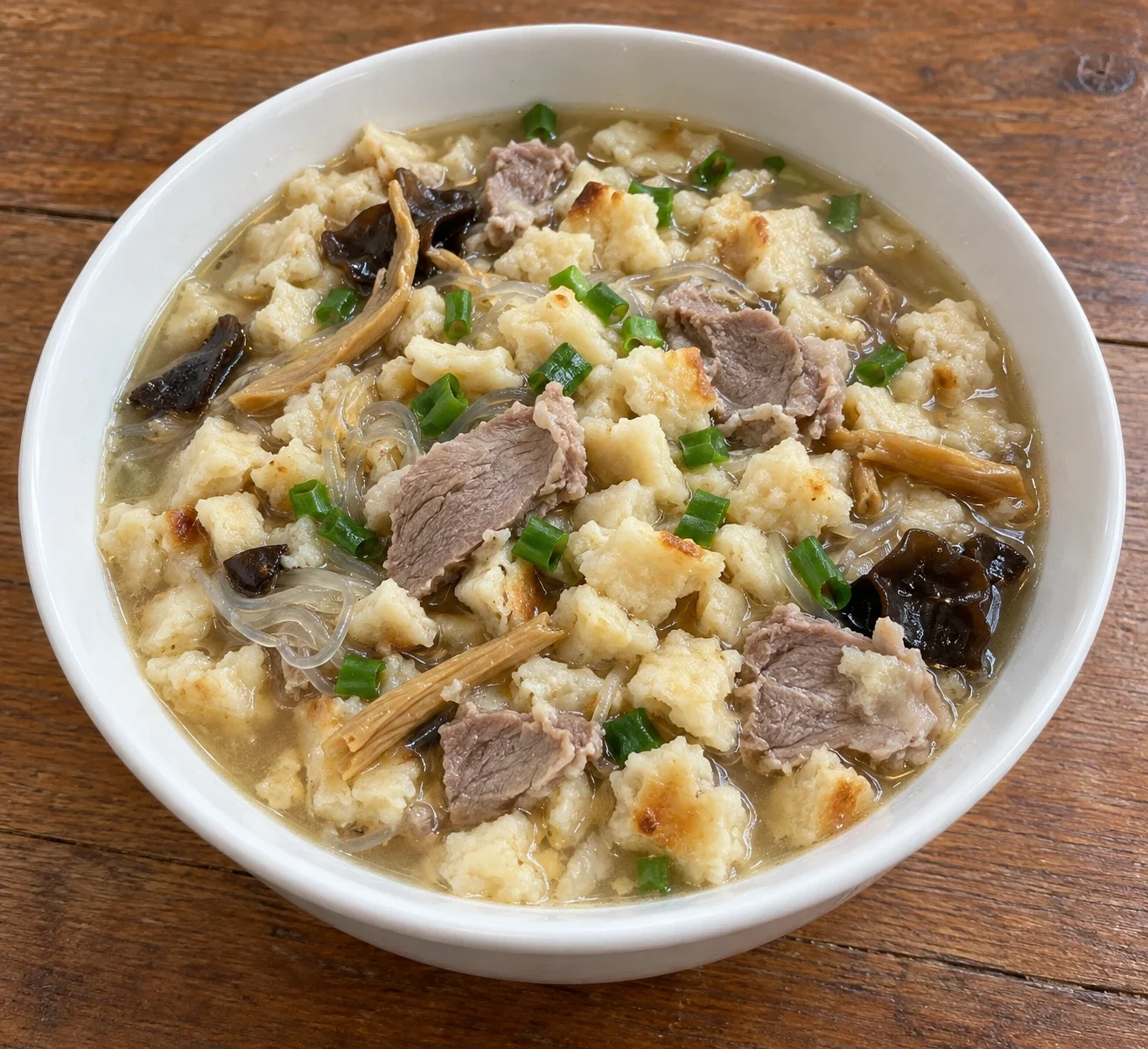
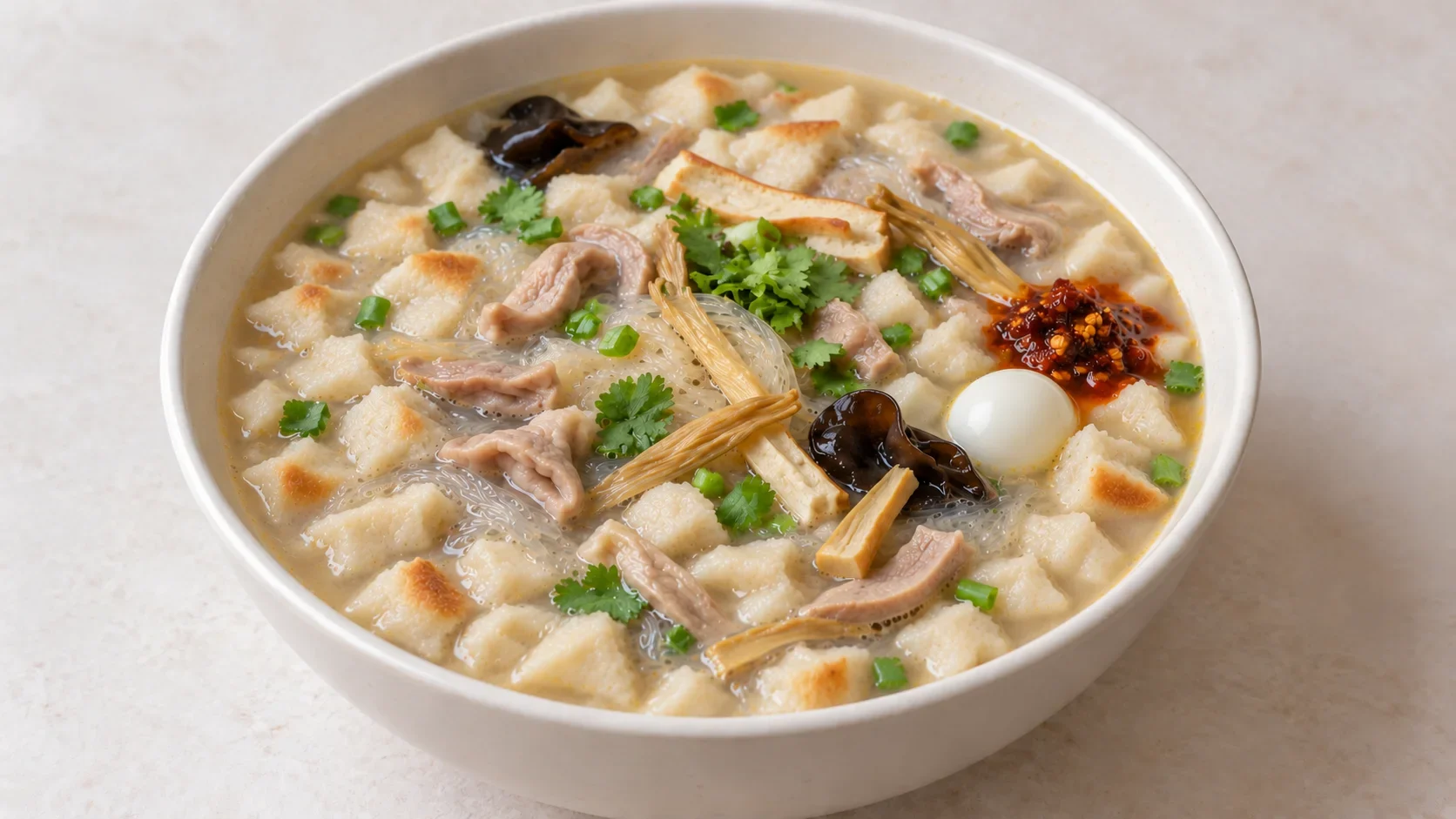
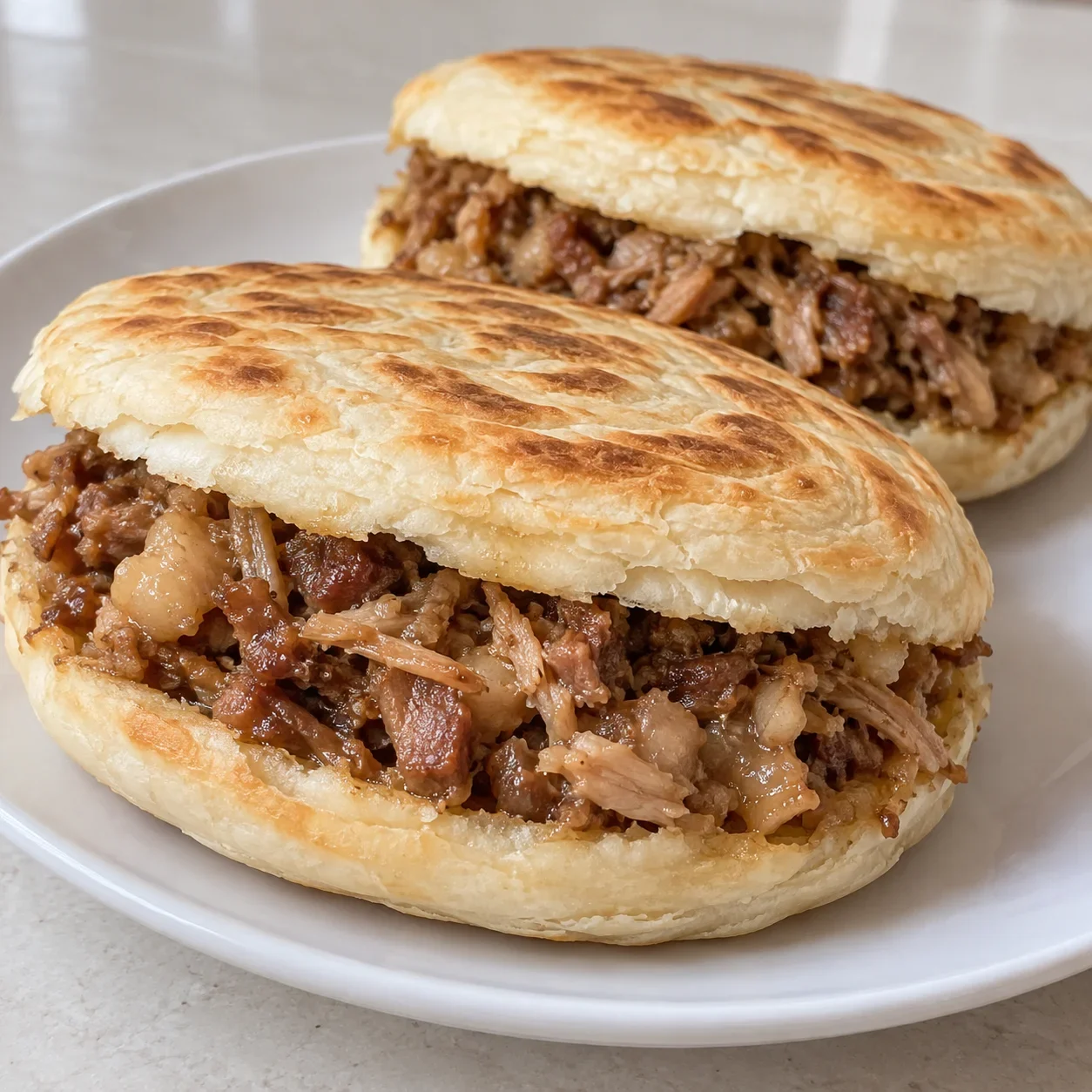
Roujiamo and yangrou paomo use bread in very different ways: one encloses a filling, while the other combines pieces of bread with a mutton soup preparation. Hulutou paomo is a separate offal-based dish. Do not assume that similar names mean the same meat or broth.
Choose your noodle texture
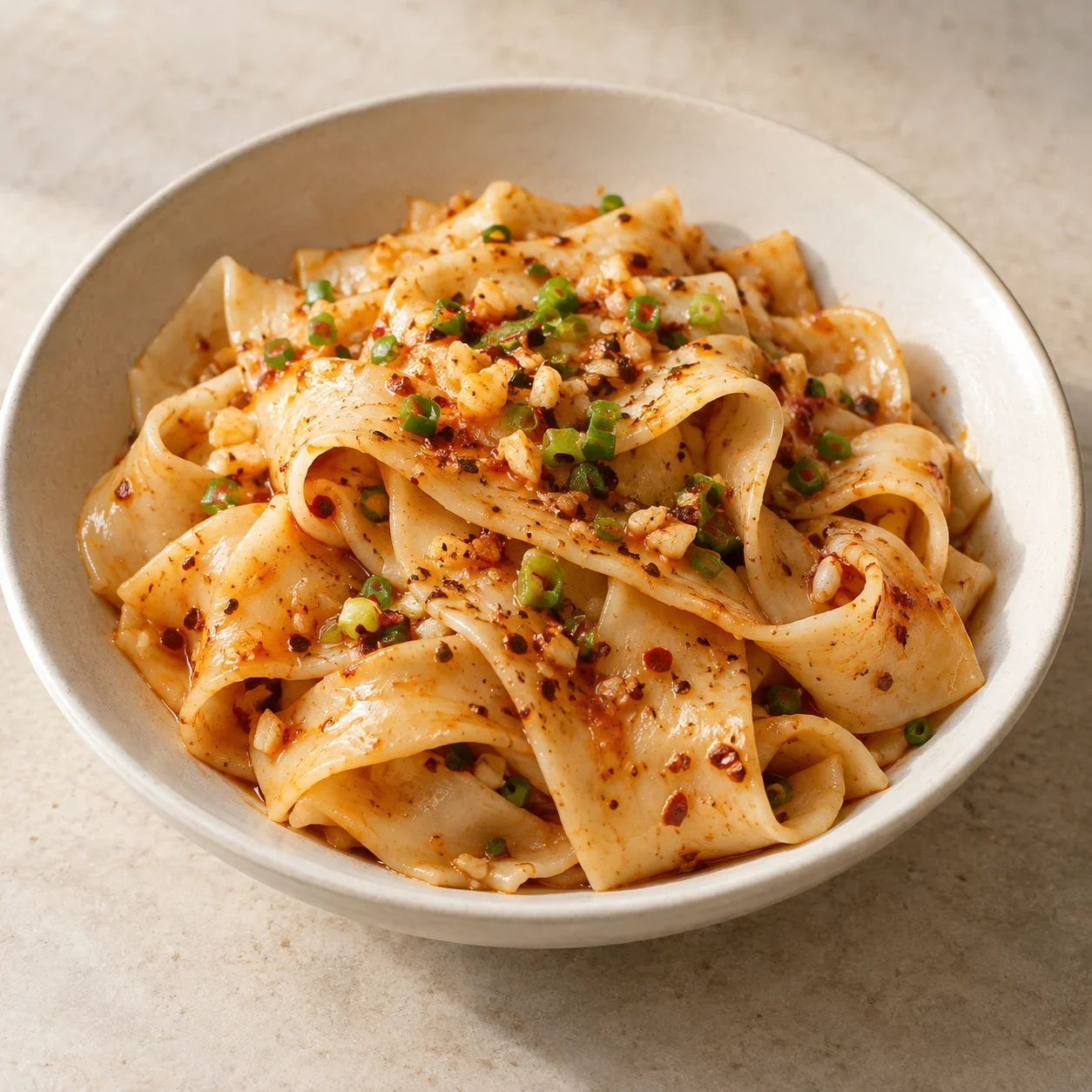
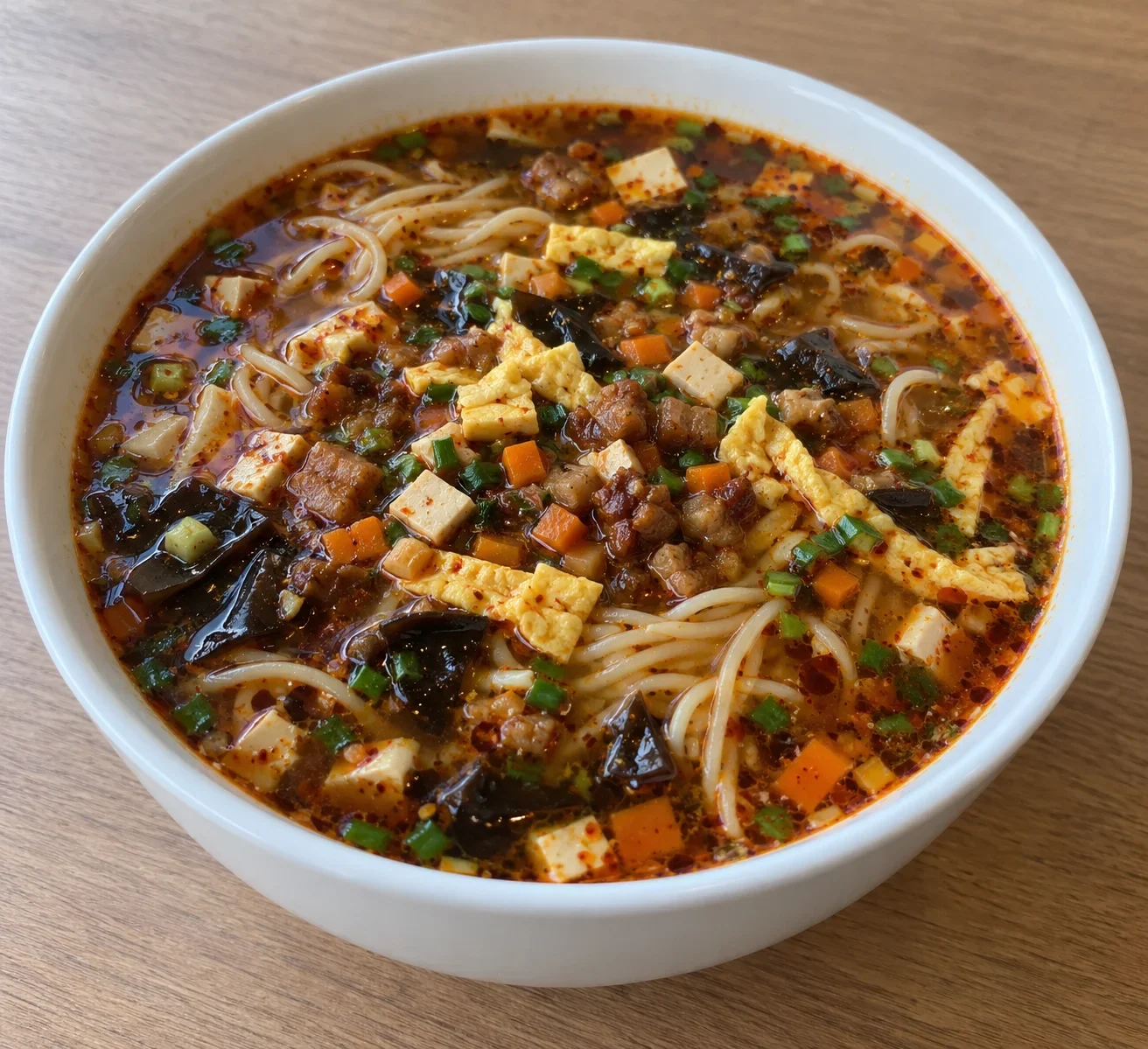
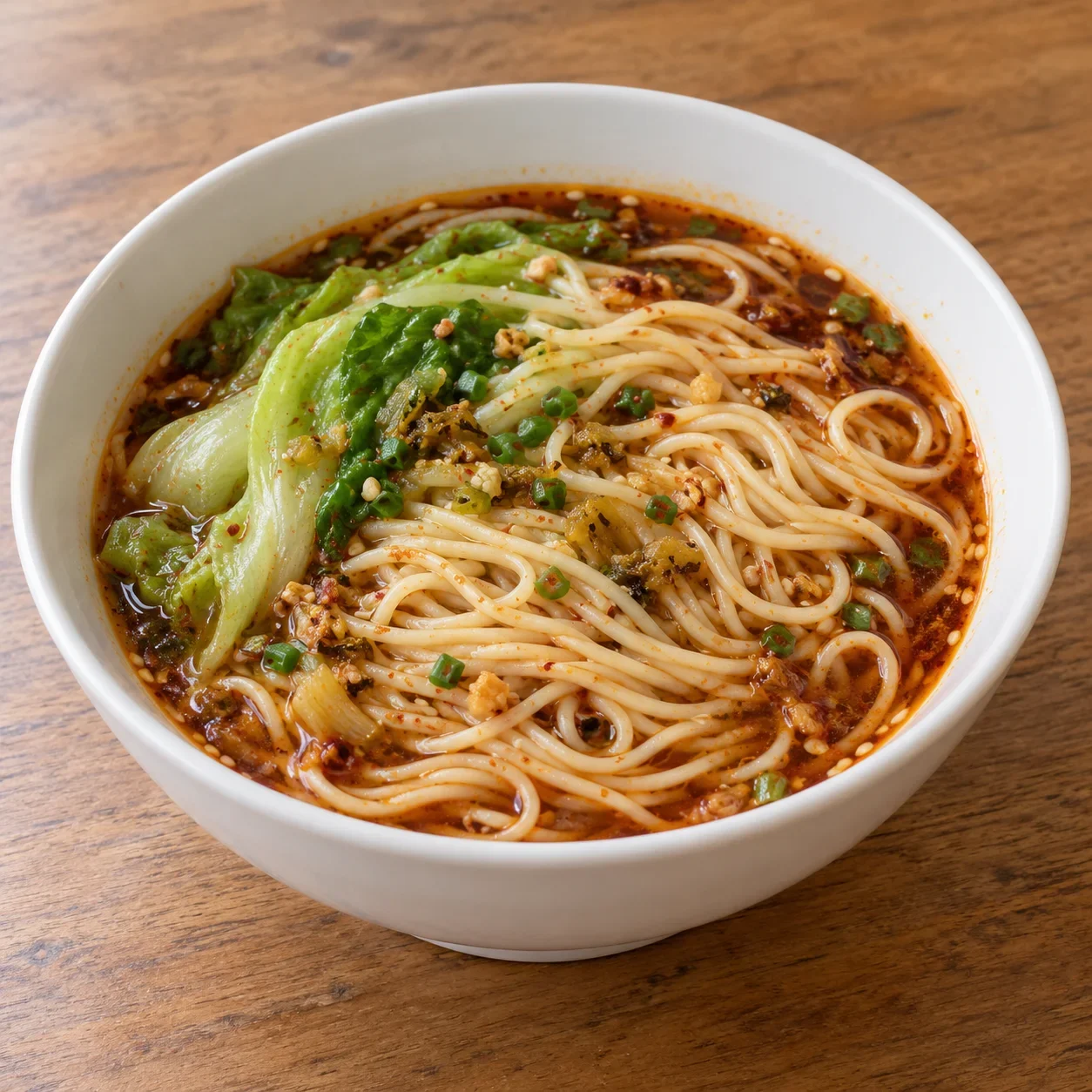
Broad biangbiang noodles and Qishan saozi noodles make different choices. Look at the toppings and sauce as well as the noodle width. Tell the restaurant which meat or seasoning you avoid; a regional association alone does not establish a dish’s ingredients or religious certification.
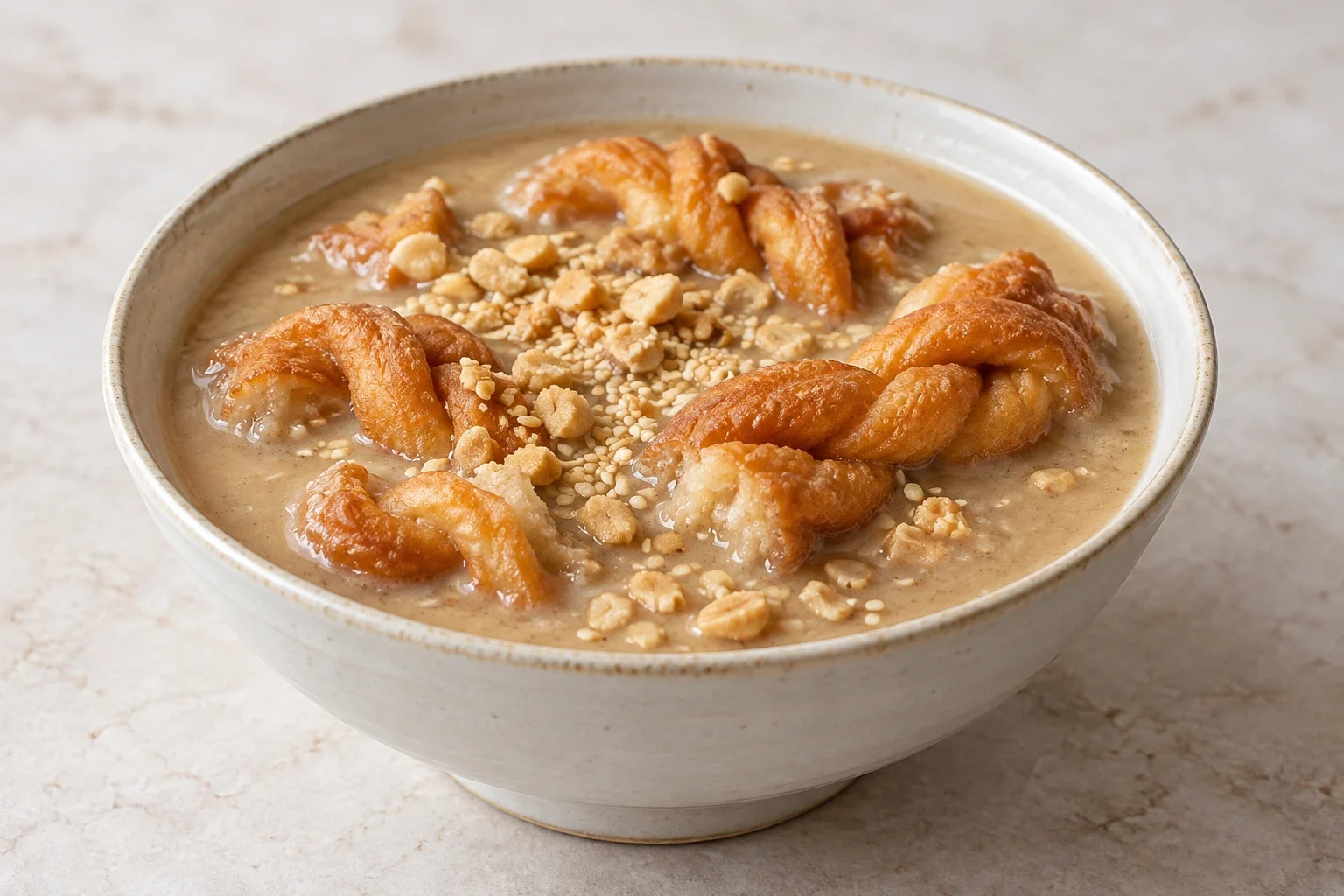
Xi’an flour porridge with fried twists · 油茶麻花
A savory Shaanxi breakfast of toasted wheat-flour porridge with fried mahua twists soaked in it. This version uses rendered sheep or goat fat and egg in the twists.
Contains wheat and egg in this version, plus animal fat. Optional peanuts and sesame need checking.
Before you order
- Check fillings, broth and sauces as well as the main ingredient.
- Ask about the serving size before ordering several dishes.
Phrases to show at the table
这里面有什么食材?
What is in this?
可以少放一点辣椒吗?
Can you make this less spicy?
这个含饮料吗?
Is a drink included?
这个是甜的还是咸的?
Is this sweet or savoury?
Turn curiosity into a shortlist.
Pick one food you are curious about and keep its Chinese name with your notes. Use the questions above when you compare it with a restaurant menu.
Explore the food